Bexar County Property Search
Bexar County Property Search
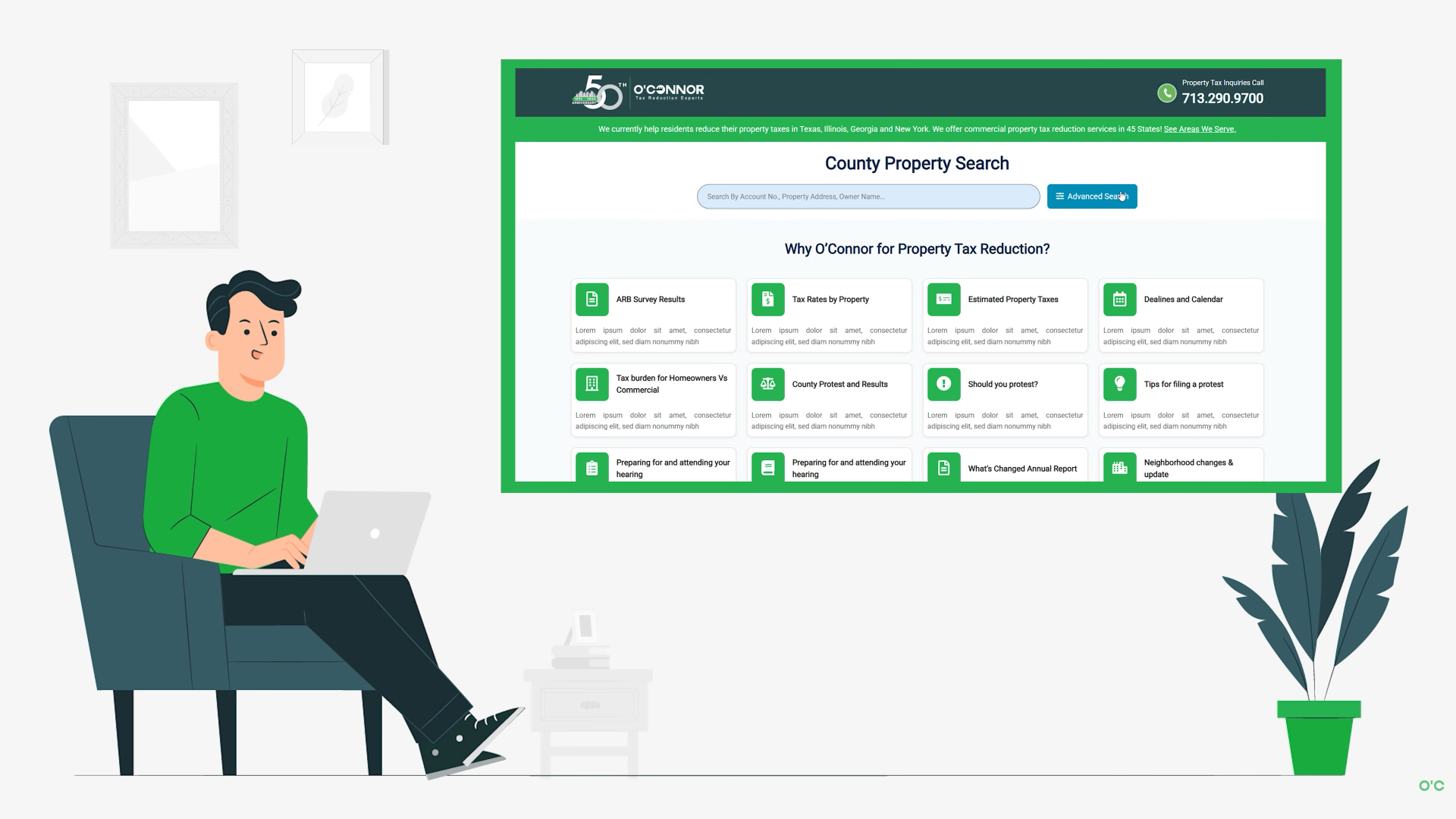
One of the oldest and most important counties in Texas, Bexar County is home to San Antonio and a diverse economy. With the growth of Texas reaching new heights, taxpayers across the state are seeing rising property taxes, and the people of Bexar County are certainly no different. As the largest expense most Texans see, property taxes are both important to the state and are something every taxpayer should be able to understand. To help the people of Bexar County, we at O’Connor have created a database that gathers valuation and tax data from several government and taxing agencies, putting it into a single database. We believe that having all of this information in one place will allow taxpayers across the San Antonio area to make informed decisions on their real estate and taxes.
Bexar County Property Records Search
The massive area that makes up San Antonio and the surrounding area is overseen by the Bexar Appraisal District (BCAD). While the appraisal district assesses homes and businesses, tax rates in Bexar County are set by several organizations, including school districts, MUDs, and the county itself, though there are dozens more. This means that accurate data for real estate is spread among several sources. The purpose of this database is to unite all of this data into one source so that it can be easily accessed and explored by taxpayers, tax professionals, and realtors.
Data available on this site includes:
- Property ownership history
- The identification numbers of parcels
- Deed information, along with formal property descriptions
- Taxable, appraised, and market values
- Assessment history
- Exemptions
- The general history of value
The Basics of Property Valuation in Bexar County
BCAD and other appraisal districts assess several types of value to homes and businesses, which are then used by taxing bodies to calculate taxes. There are three types of property values, which can make understanding the process difficult. Market value is what BCAD estimates a home will sell for on the open market, using a study of previous sales as a baseline. Appraised value is what a property is worth within the confines of law and any other legal constraints that govern assessment. Finally, there is the taxable value, which is what a home or business is worth after exemptions and other reductions. Taxable value is then multiplied by tax rates to determine how much tax is owed to dozens of governmental bodies.
Viewing Property Tax Details
Changes in real estate markets and the economy can influence the value of properties, making their value grow even if they themselves are unchanged. Even if these values stay the same, tax rates often increase, raising tax bills. Tax rates are controlled by various entities across Bexar County and are not controlled by the appraisal district. School districts, MUDs, and other municipal services depend on property taxes to function, so they will raise or lower their rates depending on budgetary needs. A taxpayer needs to be aware of the interplay between values and tax rates and how they influence the growth of levies every year.
Official Appraisal Data from Bexar County
Basic data on homes and businesses is incredibly valuable in understanding a property’s history and also its current value. This data includes all of the vital statistics that are key to a property, including the size, any exemptions, classification, and ownership history. In addition, there is information on both historical and current property values, including the current taxable value, which is calculated after all exemptions. A taxpayer should verify that all of these details are correct, and that property values are accurate at least once a year.
Bexar County Property Comparison
The only way to discover if a property is being overvalued is to compare it to similar neighboring homes or businesses. This allows a taxpayer to check for issues involving unequal or uniform appraisal, which is one of the most common reasons for appeal. Homes with similar ages, sizes, and locations can be compared to see if their appraisals are similar enough that there are no issues with unfair taxation. This can also be useful in setting the sale price for a home or determining if a current price is fair, though BCAD values and true market value can be quite different.
Important Deadlines for Bexar County
Texas uses strict deadlines when it comes to property tax issues, and Bexar County is certainly not an exception. If a taxpayer is looking for a tax reduction in Bexar County, then the two most important dates are those for filing exemptions and property tax appeals. April 30 is the cutoff date for filing an exemption, while property tax appeals have a deadline of May 15. The appeal deadline is a bit more flexible, as appeals are due 30 days after a notice of appraisal is mailed, or by May 15, whichever is later. To avoid paying extra fees or penalties, taxpayers should ensure that they pay their property taxes by January 31.
When is a Property Tax Appeal Justified in Bexar County?
Along with exemptions, tax appeals are the only way to reduce taxes in Texas. To launch an appeal, both a cause and evidence are required. A taxpayer should go over their property records and notice of appraisal to look for any basic errors, including incorrect ownership, missing exemptions, wrong measurements, or phantom improvements. Next, the value of a home needs to be examined. If it saw a sudden spike without improvements being added or is significantly higher than similar neighboring properties, then that is grounds for an appeal.
Common Mistakes Bexar County Residents Make
Texas has some of the highest property taxes in the nation, so taxpayers must make sure to use every tool available to get a reduction. There are several mistakes that are easy to make but must be avoided to ensure the maximum amount of savings. The most common one is missing deadlines, which can cost taxpayers money either by missing savings with exemptions or appeals, or raising costs by allowing taxes to go delinquent. Other mistakes are not keeping an eye on appraised values or studying the appraisal notice, not keeping up with taxation changes, and not gathering evidence for appeals.
Making Data and Terminology Easier
Jargon and regulations can often act as a wall for the average taxpayer, which keeps them from engaging in the system and allows them to miss out on savings. We at O’Connor have long championed the idea that taxpayers should stay informed, so this database is here to give clear answers to complex questions. One common issue is understanding the difference between various types of property value. Market value is what BCAD estimates that a home or business will sell for on the open market. Appraised value is determined by applying various prescribed techniques to come up with a figure appropriate for taxation. Taxable value is what is left after exemptions and other reductions. It is key to know each of these values and their purpose.
O’Connor Offers Help with Records, Appeals, and More
This database offers a resource to help taxpayers understand their values, tax rates, and burdens. Knowledge is the most important step but using that information to lower taxes could take professional help. We at O’Connor are here to assist in all property tax reduction matters. We can help our clients understand their records, analyze their appraisal, file exemptions, and we will handle every part of the appeal process. For over 50 years, we have helped Texans understand and save on their taxes. While we are a statewide firm, we do have a branch office in San Antonio to help clients directly. We always offer a personal touch, including client success agents and personalized concierge visits.
Why O’Connor for Property Tax Services?
O’Connor specializes in the review of property tax and appraisal records. We work with publicly available county property valuation and tax records. This includes analysis of assessed values, appraisal records, and tax-related information. Experience across jurisdictions supports consistent interpretation of county property tax systems. Services are provided to support understanding of property tax assessments and records.