Collin County Property Search
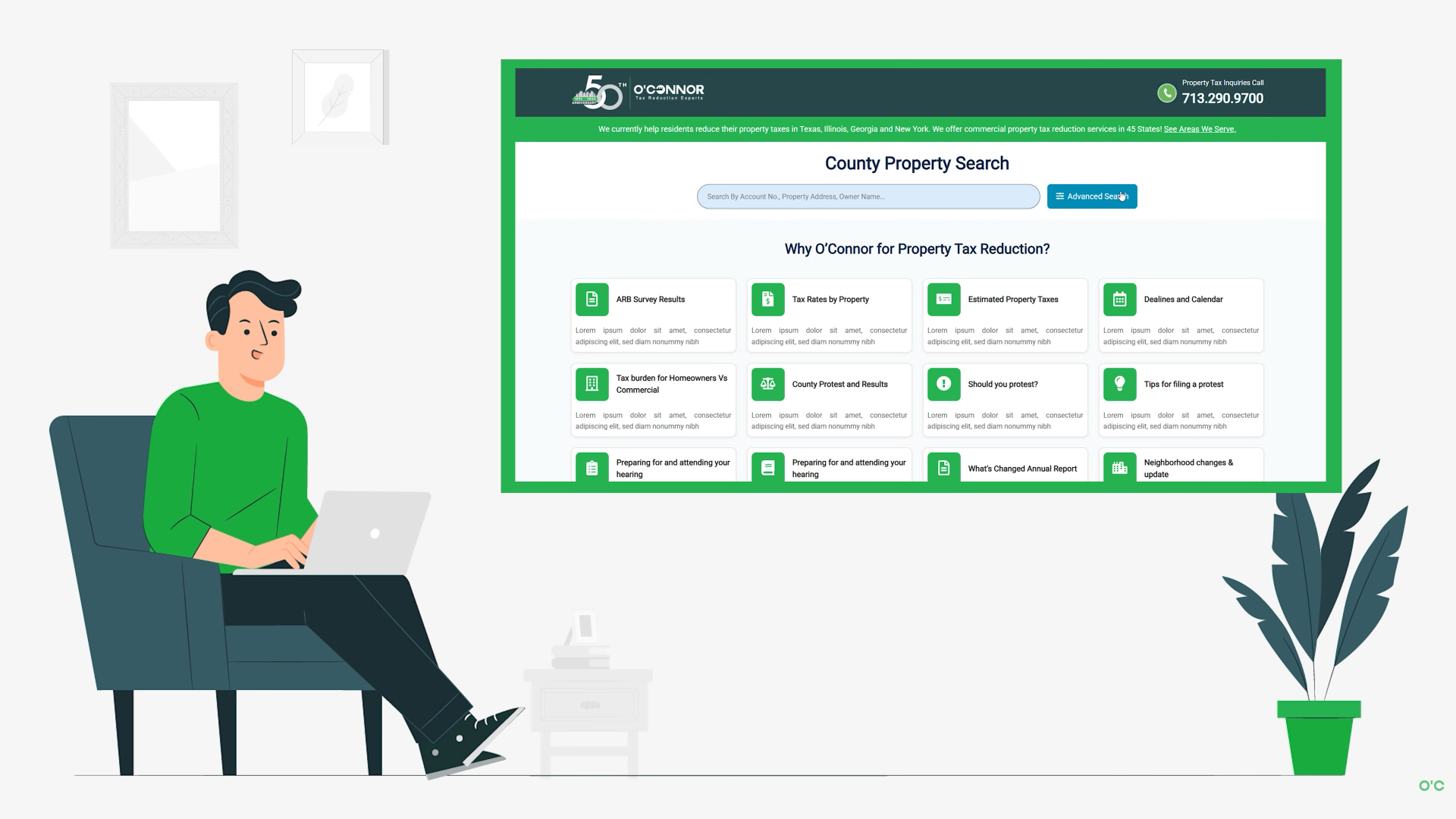
Search Collin County Property Records
Home to McKinney and over one million people, Collin County is one of the tentpoles of the Dallas-Fort Worth metroplex. Joining Denton, Collin is one of the most in-demand suburban counties in the nation. The downside of this popularity is that property values and their taxes have consistently been going up for more than a decade, making many homes unaffordable. There are options for taxpayers to cut these costs, including exemptions and protests. However, taxpayers need accurate information to effectively pursue these goals. That is why we at O’Connor created this central database for Collin County property records. This database unites many sources into one comprehensive catalog of vital records that taxpayers need to know, offering more complete information than the Collin Central Appraisal District (CCAD).
Looking up Key Collin County Property Records
Historically, it has been difficult to find all the important property records and information needed in Texas, because they are often spread across multiple agencies and databases. By centralizing information such as tax rates, valuation histories, and general property records all in one place, our goal is to help taxpayers be more informed than ever before about their taxes and how they can lower them.
Some of the records for Collin County available in our database include:
- Parcel identification numbers
- Complete ownership history
- Information on deeds and legal descriptions
- Market, appraised, and taxable value data
- Current exemptions
- Assessment history
- Breakdowns of historical valuation data
Understanding Collin County Property Values
When it comes to Texas real estate, there are three values that must be understood. Market value is what a home would sell for on the free market, while appraised value is the estimated market price that is constrained by growth caps and other legal regulations. Taxable value is the appraised figure minus exemptions and other reductions. Taxable value is what tax rates are applied to, producing a tax bill.
Look up Collin County Tax Information
There is no central tax rate in Collin County; instead, many separate rates are set by the annual budgets of various government entities. These include school districts, MUDs, hospital districts, the county itself, and others. Reviewing these details is essential for taxpayers seeking to understand their tax burdens. Both property values and tax rates change annually, so staying updated each year is important.
Official Data for Collin County
Official data can help taxpayers make decisions about their real estate and can also provide insight into the arcane taxing system. The information in this database is all-encompassing and features both current and historical data. Information that can be found here includes property values, deed records, ownership history, tax rates, and historical records. Previously, this information was only available through multiple agencies, making the search complex and often difficult.
Compare Collin County Properties
One of the best ways to determine the true value of a piece of real estate is to compare it to similar properties. This is useful for determining how much a home will sell for, what a fair buying price is, and if a taxable value is incorrect and needs to be corrected through appeal. Unequal appraisal is one of the primary reasons for a successful tax appeal, and property comparisons are the main form of evidence that needs to be brought in order to prove the case.
Important Collin County Deadlines
Texas uses hard deadlines for most property issues, which means once they are crossed, there is no option for the taxpayer. This makes keeping up with the many deadlines in Texas vital to the long-term financial health of a property. Knowing the deadlines for paying taxes, filing exemptions, tax appeals, and business personal property renditions are all key dates that need to be monitored. The only leeway that taxpayers are given is if a deadline falls on a weekend or holiday, then it is extended to the next working day.
Is a Property Tax Appeal Necessary?
Collin County has some of the fastest-rising taxes in Texas, so property tax appeals are a popular tool used to combat them. Along with exemptions, these protests are the only option to bring these taxes back down to a manageable level. Justifications for property tax appeals include basic errors in an appraisal, such as missing exemptions, the wrong owner, nonexistent improvements, or incorrect attributes. Unequal appraisal or excessive valuations are also reasons to protest.
Common Property Tax Mistakes
With intricate rules and deadlines, it is easy for taxpayers to make mistakes that could cost them in the long run. Avoiding these mistakes is often the first step in achieving long-term financial stability. Missing deadlines is the No. 1 mistake, as Texas is typically unforgiving when it comes to cutoff dates. Taxpayers often fail to closely review their notice of appraisal or property records, which can lead to missing exemptions, unchallenged values, or costs due to erroneous information.
Clarifying Terminology and Data
Property tax records and data can be quite dense, especially with some clunky terminology on top of it. We at O’Connor believe in cutting through this so that taxpayers can best understand their situation, allowing them to make informed decisions. For instance, the three types of property value are rarely defined. Market value is what CCAD estimates a property would sell for on January 1 of the tax year. Appraised value is that figure restrained by caps and legal framework, while taxable value is that number reduced by exemptions.
O’Connor Offers Guidance on Tax Records and Reductions
This database supports O’Connor’s goal of informing taxpayers across Collin County with clear and concise data. Armed with property records and insight, we hope that taxpayers are ready to take the next step. When it comes to understanding data, filing exemptions, or carrying out appeals, it often helps to have an experienced firm by your side. For over 50 years, we at O’Connor have helped Texans achieve reductions through appeals and more. There is no cost to sign up and no risk for appealing or challenging taxes.
Why O’Connor for Property Tax Services?
O’Connor specializes in the review of property tax and appraisal records. We work with publicly available county property valuation and tax records. This includes analysis of assessed values, appraisal records, and tax-related information. Experience across jurisdictions supports consistent interpretation of county property tax systems. Services are provided to support understanding of property tax assessments and records.