Property Tax Inquiries Call 713.290.9700
We currently help residents reduce their property taxes in Texas, Illinois, Georgia and New York. We offer commercial property tax reduction services in 45 States! See Areas We Serve.
Property owners in Travis County can challenge their property’s assessed value if they believe it exceeds market value. Protests are filed with the Travis Central Appraisal District, and professional firms such as O’Connor help property owners analyze their assessments and pursue potential reductions in property taxes.
Video Thumbnail

Travis County Property Records and Information

Part Silicon Valley and part Nashville, Austin rivals San Francisco as the hottest place to live in America. Unfortunately, this rapid growth has seen Travis County property values triple over the past decade, with many owners being forced out due to soaring property taxes, especially in Austin itself. The one bright spot is that the people of Austin and Travis County protest their taxes like few other taxpayers in Texas. We at O’Connor are lending our expertise to this fight with this database. This new database gathers property records from the Travis Central Appraisal District (TCAD), the tax office, the collector-assessor, and more. This centralized database is the first of its kind and should give Austin residents the information they need to fight TCAD and aggressive taxation.

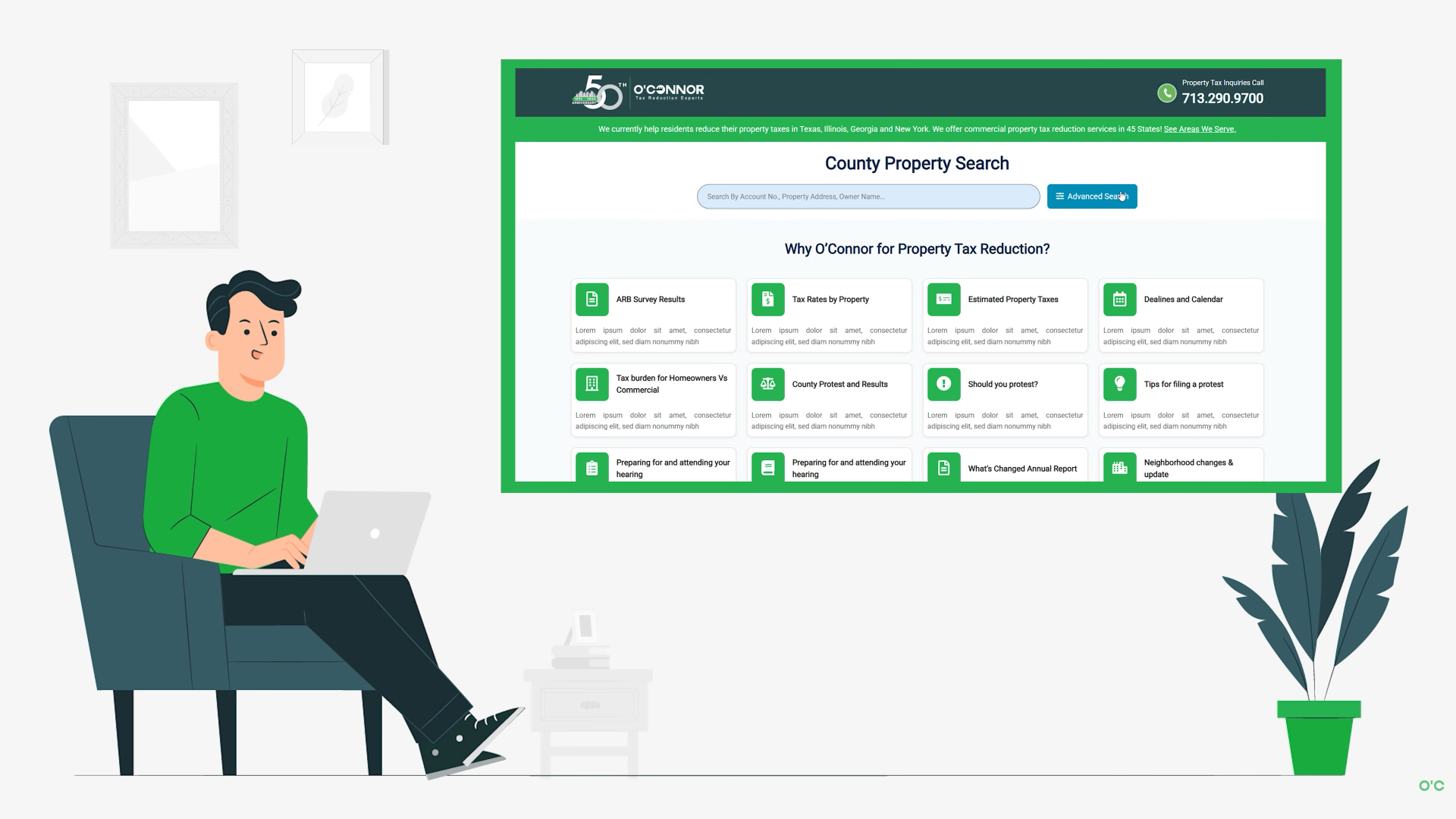
Travis County Property Records Search

When trying to search properties in Travis County, taxpayers often cannot get the full picture because records are divided among many agencies, not just the appraisal district. The goal of this database is to consolidate property records, value information, tax rates, and historical data into a single searchable source that can aid taxpayers in their quest for knowledge and reductions.

Records and resources in this database include:

  • Parcel identification numbers
  • Historical ownership data
  • Deed records and legal descriptions
  • Value data, including fair market, appraised, and taxable value
  • Present exemptions
  • History of assessment
  • Historical valuation data
Frequently Asked Questions About Searching Travis County Property Records

Parcel ID, address, account number, or owner’s name.

Yes. While TCAD does have key data, it is also missing important factors such as tax rates, which are vital to understanding a property’s statistics and possible tax burden.

Current value, tax rate, ownership, size, exemptions, and classification are all key pieces of information that need to be reviewed.

Travis County Property Valuation

Property values are broken up into three categories for taxation purposes. Market value is what a home or business is estimated to sell for on the free market if it is sold. Appraised value is created by TCAD using techniques such as mass appraisal to determine how much a property should be taxed. Taxable value is what a property is worth after exemptions and other reductions are used to refine it down. Taxable value is then multiplied by various tax rates to come up with tax bills.

Frequently Asked Questions About Travis County Property Values

Property values change annually due to market conditions and can easily increase without any changes being made. Taxpayers who watch their appraisals can catch expensive issues early.

Tax rates are used with taxable value to determine what a taxpayer owes.

No, TCAD only appraises properties. Tax rates come from dozens of individual bodies, such as school districts and MUDS. 

Travis County Property Tax Details

Travis County tax rates are determined by independent taxing bodies. The largest of these are school districts, but MUDS, hospital districts, and countless others also have their own tax rates. These rates will rise and fall depending on the annual budget of these bodies, which makes them unpredictable. Since property values will also wax and wane due to market forces, tax bills in the Austin area are notoriously mercurial, and annual changes can be staggering.

Frequently Asked Questions Travis County Property Tax Details

There is no county or city-wide tax rate. Organizations such as Austin ISD, MUDs, and hospital districts set their own tax rates.

Yes, they change frequently as the annual budgets of taxing bodies face different demands depending on the year. Larger budgets require higher tax rates.

No, appeals and exemptions lower the taxable value of properties, which are then multiplied by tax rates.

Official Travis County Appraisal Data

Many aspects go into creating the property tax structure in Texas and Travis County, and there are multiple variables to keep track of to understand the whole picture. This basic data is crucial knowledge and is typically kept by several agencies. This data includes property values, tax rates, exemptions, square footage, classification, and ownership. The history of a property is vital in understanding its present and future, making historical records an important resource.

Frequently Asked Questions About Official Appraisal Data

Yes, ownership history and past valuations are both included. This information goes back all the way to construction.

Yes, both values and tax rates determine what property tax burden an owner will receive. The full history of valuation for the property will also show how its value has grown, perhaps revealing unfair appraisals or taxation.

Incorrect ownership, exemptions, classification, and size are all errors that need to be corrected as soon as possible. These are the easiest to fix using a property tax appeal, but can also be resolved by a correction of the appraisal roll.

Comparing Travis County Property Values

If a taxpayer is thinking about launching a property tax appeal or just wants to see how they measure up to their neighbors, comparing properties can be a wealth of insight. Under Texas law, properties of similar sizes, age, and location should have similar appraisals. If two homes that are similar in most attributes are appraised differently, then that could be a case of unequal appraisal. This is one of the primary grounds for lowering value through appeals, and comparison records are a necessary piece of evidence to prove the taxpayer’s case.

Frequently Asked Questions About Property Comparisons

Besides errors, this could be because of variables such as improvements, damage, or renovations. Conversely, two properties could be valued the same, but one has deferred maintenance and should be appraised lower.

By comparing one property to another, it can be proven that overassessment is an issue, potentially leading to a reduction in the appellant’s values.

Yes, this data can give homeowners and homebuyers a rough idea about what homes sell for in a particular area. They also give potential buyers an idea of what property taxes are in a given area.

Travis County Deadlines

Whether it is for appeals, exemptions, or paying taxes, meeting deadlines is important for any taxpayer in Texas. Property taxes are due on January 31 every year, unless that happens to be a weekend, in which case it is extended to the first workday. If these taxes are even a one day late, delinquency starts, with penalties and fees beginning at the stroke of midnight. For appeals and exemptions, the deadline is harder, and usually means that a taxpayer loses the chance to file entirely. This makes deadlines one of the most important pieces of information to keep in mind.

Frequently Asked Questions property taxes due in Travis County

The Austin area, like the rest of Texas, must have all taxes paid by January 31. The only exception is if the date falls on a weekend, then the first working day becomes the new deadline.

April 15 is the final day to file BPP paperwork. Failing to do so could result in the forfeiture of the BPP exemption, which is $125,000.

May 15 is the typical deadline for Texas, though there are some caveats. First, if the deadline falls on a weekend, it is postponed until the next working day. Second, appeals are due either on May 15 or 30 days after the notice of appraisal was mailed, whichever is later.

Is a Property Tax Appeal Needed?

Since tax rates cannot be protested, the only two ways to lower taxes in Texas are exemptions and property tax appeals. Travis County has some of the highest participation rates in the state when it comes to protests, with over one-third of all homes or businesses challenging their assessments last year. With some of Texas’ highest taxes, filing an appeal is almost a necessity in Austin. Reasons to appeal include incorrect information, such as ownership, size, classification, or missing exemptions. Unequal appraisal and comparisons to home sales can also be used to possibly achieve lower taxes.

Frequently Asked Questions About Property Tax Appeal Needed

Yes, though not directly. Appeals, when successful, can lower a taxpayer’s taxable value, which is what tax bills are based on. Typically, lowering the value translates into lower taxes.

Unfair appraisal, incorrect information, or large increases in value are all valid reasons to challenge assessments. 

Yes, and appeals with better evidence will see even more success. This includes using photographs, documenting deferred maintenance or damage, comparing appraisals with similar homes, and even looking at how much homes sold for in the past few years.

Common Mistakes That Cost Travis County Taxpayers Money

Despite being such a huge burden, property taxes in Texas are often ignored until they need to be paid, which is the first mistake that taxpayers make. Tax rates and values change every year, and taxpayers need to be aware of what their current assessment is. The second mistake is missing deadlines, as they can either result in penalties or possibly mean missing out on an exemption or appeal for another year. Not paying attention to the appraisal notice is another mistake, as it can reveal problems early.

Frequently Asked Questions About Travis County Property Mistakes

Missing deadlines is usually the most common, whether for property tax appeals, exemptions, or paying property taxes on time.

The appraisal notice is sent out in late March or early April. A frequent mistake is not studying this document enough, as it will either contain basic errors or taxpayers will miss an appraisal increase that might need to be challenged.

All businesses should file a business personal property (BPP) rendition by April 15. Failure to do so can lead to penalties and the possibility of losing the $125,000 BPP exemption.

Simple Terminology and Data to Help Taxpayers

Since information is the most important thing a taxpayer can have, providing easy-to-understand data to people is one of our top priorities at O’Connor. That is why we created this database. We also aim to make terminology easier to digest, as official records can often be obtuse. Our years of experience have taught us that the primary misunderstanding is around the types of property values. Market value is an estimate of what a home or business would sell for, with the figure being based on current sales and market trends. Appraised value is determined by TCAD and is used to determine what percentage of a property’s value should be taxed. The final term is taxable value, which is what a property is worth after exemptions are applied. This is then multiplied by tax rates to get the final levy.

Frequently Asked Questions About Terminology and Data

No, market value is what TCAD believes a home will sell for, while taxable value is the amount that tax rates will be applied to. Taxable value is determined by exemptions and other reductions, along with the initial appraised value.

Yes, they work excellently in tandem. Exemptions lower the value automatically, while appeals can correct overzealous assessment, bringing the figure down further.

Typically, yes, but tax rates are independent of value. The value could increase one year, while rates fall, which leads to an overall drop in property taxes. The opposite is also true. This makes it important for taxpayers to manage their value with appeals and exemptions, as these can be controlled, while tax rates cannot.

O’Connor Offers Guidance with Appeals, Data, and Analysis

We at O’Connor created this database to help our clients navigate the difficulties when it comes to dealing with Travis County’s growing property taxes. We hope that the information will allow taxpayers across the Austin area the chance to stay informed about their homes and businesses. We are here to aid clients who need professional help. Whether that is with understanding assessments, exemptions, or getting representation for appeals, we are here to help. We have been fighting high taxes in Texas for over 50 years and know what information is needed for people to reduce their taxes.

Frequently Asked Questions About O’Connor

There are no hidden fees or upfront costs for signing up with us. You will only be charged a contingency fee from your savings if we are able to lower your taxes.

Rather than use chatbots, AI, or faceless emails, we have a client success team that will act as a point of contact throughout the whole process. This gives clients a person to interact with and get answers from, rather than an automated system or disinterested customer service.

Yes, we offer all services to commercial properties. This includes analysis, appeals, BPP rendition assistance, and cost segregation.

Why O’Connor for Property Tax Services?

O’Connor specializes in the review of property tax and appraisal records. We work with publicly available county property valuation and tax records. This includes analysis of assessed values, appraisal records, and tax-related information. Experience across jurisdictions supports consistent interpretation of county property tax systems. Services are provided to support understanding of property tax assessments and records.

Tips for filing a protest
Neighborhood changes & update
Tips for filing a protest
Business Renditions
Preparing for and attending your hearing
Tax Rates by Property
County Protest and Results
Maps and Data
Travis County Property Search
News & Updates
Table of Contents Reasons to File an Appeal What is Unequal Appraisal? Can Appeals Lower my Taxes? What Evidence do…
Table of Contents Every Homeowner Should Get a Homestead Exemption Property Tax Appeals Act as an Equalizer Reasons to Appeal…
Table of Contents The Right to Appeal is Protected by the Texas Constitution How Appeals Benefit Property Owners Most Texans…
Table of Contents Common Mistakes That Cost Texans Money Missing Deadlines Not Reviewing the Appraisal Notice Not Filing Property Tax…
Key Travis County Deadlines
January 31, 2026
Property taxes are due with the assessor-collector
March to April
Notices of appraisal are mailed
April 15
The due date for business personal property renditions
April 30
Deadline to file exemptions
May 15 (or 30 days after the notice of appraisal is mailed, whichever is later):
Cutoff date for filing property tax appeals