Dallas County Property Search

Dallas County Property Records Search and Tax Information
Dallas County property records contain all of the information taxpayers need to know about their real estate. They can view any exemptions their property has, the appraised value, and how its vital statistics are recorded. Taxpayers will also see the history of their home’s taxable value, which gives an idea of how potential taxes have increased over the years.
There are several ways to locate a property using these records, including using the address, owner’s name, or account number. If a deeper dive into the property’s metrics or history is needed, the Advanced Search function allows for exploration of other details, including exemption indicators, tax data, appraisal value, and data related to taxation.
Understanding property tax and values in Dallas County and the rest of Texas can be confusing; this is why we are trying to provide a concise overview in one place. Using the search tool for a property in the Dallas Central Appraisal District (DCAD) should be easy and informative, with little stress in finding every bit of information needed. We at O’Connor have put together a complete property database in simplified form to help taxpayers across Dallas County find all of their tax information in one place, with clear terminology to help demystify taxes, values, and more.
Search Dallas County Property Records
As one of the largest counties in Texas, keeping track of property records in Dallas can be a difficult task. These are usually spread across multiple agencies and websites, requiring taxpayers to sift through several different records systems. The purpose of this database is to streamline the process, with each important record being available in one place. There are many official records that are vital to financial health, property value, and possible appeals. These include:
A search through Tarrant County property records on this site may include:
- The history of ownership for a property, including the current owners
- Identification number for the parcel or parcels associated with a property
- Deed records and legal description
- Various types of values, including market, appraised, and taxable
- The history of assessments for the piece of real estate
- Current and available exemptions
- The history of the real estate’s valuation
Property Value Terminology
Many factors combine to produce a property’s value, which in turn is used to calculate a tax bill. Understanding these factors is vital to comprehending Dallas County property records. It is not uncommon for there to be several value types associated with a property.
Market value is what the home or business would sell for on the open market, as estimated by DCAD. Appraised values are what the district believes a home or business should be taxed on, while taxable value is the figure that will be taxed on after exemptions and other limits. Taxable value may not be included on the list, meaning a taxpayer may need to calculate their own taxable value after exemptions.
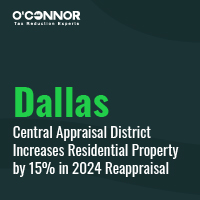
Property values in Dallas County have consistently been going up for a decade and are one of the main reasons tax bills increase. This is why it is so important to know about real estate values, as it gives a taxpayer a picture of how much their home is worth to the CAD. These values are also key for property tax appeals, if protests are needed to correct issues or inaccurate costs.
View Property Tax Details
When it comes to property taxes, the devil certainly is in the details. Aspects like tax rates, appraised values, and exemptions all combine to produce a yearly tax bill. Dallas County has been experiencing rising values and taxes consistently, which means taxpayers need to be wary of every change.
Tax rates are established by many taxing bodies, including MUDs, school districts, and the county itself. With each of these entities figuring into bills, it is important to know how real estate is being taxed and where that money is going. Keeping up with tax records in Dallas County is essential for financial health and peace of mind.
Since both taxes and values on real estate change every year, it is important to stay up to date with annual trends in Dallas County are doing on an annual basis. Tax rates, values, and even exemptions can fluctuate wildly each year, and keeping the trends in mind will help to be prepared to pay taxes or even protest them when the season comes. Deadlines are crucial to keep up with, as Texas does not give many second chances.
Using Official Data from DCAD
DCAD keeps a master database of all properties in Dallas County, which is used for many purposes, including taxation. It is from this data that both property records and tax bills are built, and it documents the health and worth of homes, businesses, and even raw land. Data gathered from appraisals has many facets, including ownership information, exemptions, and taxable, market, and appraised values, and a historical record of how the real estate has changed over the years. DCAD is supposed to keep these up to date, as this data is crucial to the funding of local government. It can also be used to track market trends and to understand how neighborhoods are developing.
Official Dallas County appraisal data is also useful to taxpayers, as it allows them to see how their homes and those of their neighbors are being evaluated. If they are being overassessed by DCAD, they can use this data to help determine what a fair assessment should be. It also allows a review of the details of a property, such as the square footage, age, and improvements. This data is also used for legal purposes, as well as aiding in voter registration and other important matters.
Comparing Property Valuations
When deciding to protest property values in Dallas or the rest of Texas, one of the key pieces of evidence is the value of a home or business compared to similar properties nearby. Appraisal records from DCAD are invaluable when it comes to this data, and these records are often the only way to obtain it.
With these records, it is possible to view any Dallas County property values needed to help contextualize or prove the case. This includes market, appraised, and taxable values. With this data in hand, owners will be able to compare their property to those of similar size, location, and condition. If there is a difference between a property and comparables, then there are solid grounds for an appeal.
This data is not only useful for appeals, but is also helpful in tracking any assessment changes or observing valuation patterns in an area. This can be used for research into real estate for homebuyers, investors, or marketers. If an individual is looking to sell a property, it gives a strong estimate of how much it could sell for.
Know Important Dallas County Property Tax Deadlines
Dallas County, like the rest of Texas, runs its property taxes on a series of strict deadlines. From exemption cutoff dates to appraisal notices, to appeal deadlines, a taxpayer needs to stay current with many dates that are both hard and fast. Keeping within these timeframes is a must, as there can be major financial consequences for a missed exemption or a late tax bill.
Property taxes are due every January 31. If this happens to be on a weekend, then it is extended to the following business day. Once the calendar rolls into February, penalties and interest begin to accrue rapidly. If this is not addressed by July, the account goes to collections and additional fees are added. This makes January 31 the most important date to keep in mind.
May 15 is the deadline to protest taxes, while the appraisal notices are sent out in late March or early April. Business owners will need to have their business personal property renditions filed by April 15. Like property tax bills, the deadlines will move to the next business day if they fall on a weekend. For homeowners, another key date is April 30, which is the deadline for the homestead exemption.
Is a Dallas County Property Tax Appeal Appropriate?
Property tax appeals can correct errors, lower taxable values, and ensure that a property is being categorized and taxed correctly. Along with exemptions, this is the only option available if a taxpayer is looking to reduce their taxes. Determining if an appeal is an appropriate course of action requires understanding the assessment, which contains the information necessary to make a decision.
The appraisal notice will contain basic information that must be confirmed as accurate. This includes square footage, improvements, and other tangible features. There are also details like ownership or which taxing jurisdiction the property falls under that should be confirmed. An appeal needs to be filed if there are any inaccuracies in this basic information.
If the appraisal has gone up significantly in one year, is unequal compared to neighboring properties with similar characteristics, or does not take into account things like deferred maintenance, then these are also possible grounds for appeal. Being denied a previous exemption is another matter that can be protested. If a taxpayer has any of these issues, then a tax appeal is usually called for.
Common Property Tax Mistakes That Cost Taxpayers Money
In Dallas County and the rest of Texas, property tax appeals are enshrined in the Constitution and provide an effective way to achieve reductions. However, it can be difficult to navigate some of the rules, and taxpayers often make mistakes that end up costing them money in the long run. The biggest issue is taxpayers not checking their appraisal notice when it comes in March or April. This contains both basic property information and the assessed and market value. This is a crucial step in determining if an appeal is necessary. This assessment should be checked for factual errors, such as ownership or size, which could easily be fixed. Issues with a high appraisal can also be spotted in this manner.
Another major issue is missing deadlines. Texas has harsh deadlines when it comes to property taxes, and appeals are no exception. May 15 is usually the deadline for filing an appeal, though this can change if that date falls on a weekend. If an appraisal notice was mailed after April 15, then the taxpayer has 30 days to appeal from the date the notice was mailed. Sometimes, DCAD will extend the appeal window, though this is a rare occurrence. Extensions are not given under any other circumstance.
Simplifying Complex Data and Terminology
DCAD and other appraisal districts use complex terminology and esoteric data to help put together appraisals and tax bills. We at O’Connor look to simplify these terms, making them more accessible to laypeople looking to get a fair tax reduction. While this official information is public record, understanding it can be difficult, especially when it comes to applying the data to appeals or other forms of reduction. Our goal is to make this data and terminology more understandable, as it allows more people to engage with the process.
When it comes to real estate, market value is the estimated worth of a property on the open market. Appraised value is what DCAD has determined a property’s worth to be under statutory regulation. Taxable value is what a piece of real estate is valued at after exemptions and other factors are applied. These figures are the primary reason that tax bills and assessments change annually. Tax rates also play a role. These are set by governmental bodies like MUDs, school districts, and counties. Understanding these terms, ideas, and data is all important for a taxpayer to be informed about their taxes and rights. By listing them in a central location with clear data, we hope to provide a resource that DCAD will not.
Professional Help for Dallas County Property
Having the correct data in the hands of taxpayers is the first step to achieving a property tax reduction. Without it, they would not know that they needed to pursue an appeal in the first place. Once owners have reviewed their assessment, property records, and other data, they may discover that they are being taxed incorrectly or unfairly. While taxpayers can go after appeals on their own, it is often best to have an experienced firm to help navigate complex systems, gather evidence, and acquire representation in hearings. This is where O’Connor comes in.
In addition to these informational resources, we can also analyze appraisals for errors, gather evidence for appeals, and represent our clients in hearings with DCAD, the appraisal review board (ARB), and even coordinate litigation if needed. We also provide world-class analysis of property sales and appraisal comparisons using our proprietary databases, which handles the most difficult part of evidence gathering. We also have over 50 years of experience fighting appraisal districts in Texas, especially DCAD and the other counties surrounding Dallas.
We also offer assistance in reviewing property tax and appraisal records in Dallas County and the rest of Texas. We believe that keeping our clients and taxpayers informed is the best way to protect their interests and wallets. Thanks to our experience across both Texas and the nation, we can help our clients through difficult tax situations, along with providing best-in-class assistance with information, data, and analysis.
Why O’Connor for Property Tax Services?
O’Connor specializes in the review of property tax and appraisal records. We work with publicly available county property valuation and tax records. This includes analysis of assessed values, appraisal records, and tax-related information. Experience across jurisdictions supports consistent interpretation of county property tax systems. Services are provided to support understanding of property tax assessments and records.