


The DFW area is one of the largest metropolitan areas in the nation, and Collin County is a major part of it. The premier suburb, Collin, is quickly becoming one of the most prosperous counties in Texas. With a growing tech industry flourishing in Dallas, the demand for homes and businesses in Collin has gone through the roof in the past decade, with property values tripling since 2014. These increased values have led to the Collin Central Appraisal District (CCAD) raising taxes to match. In response, the people of Collin have used property tax protests to even the playing field. In 2026, appeals are needed more than ever, as historic taxes continue to rise.
Collin County Homes Add 1.8% to Value
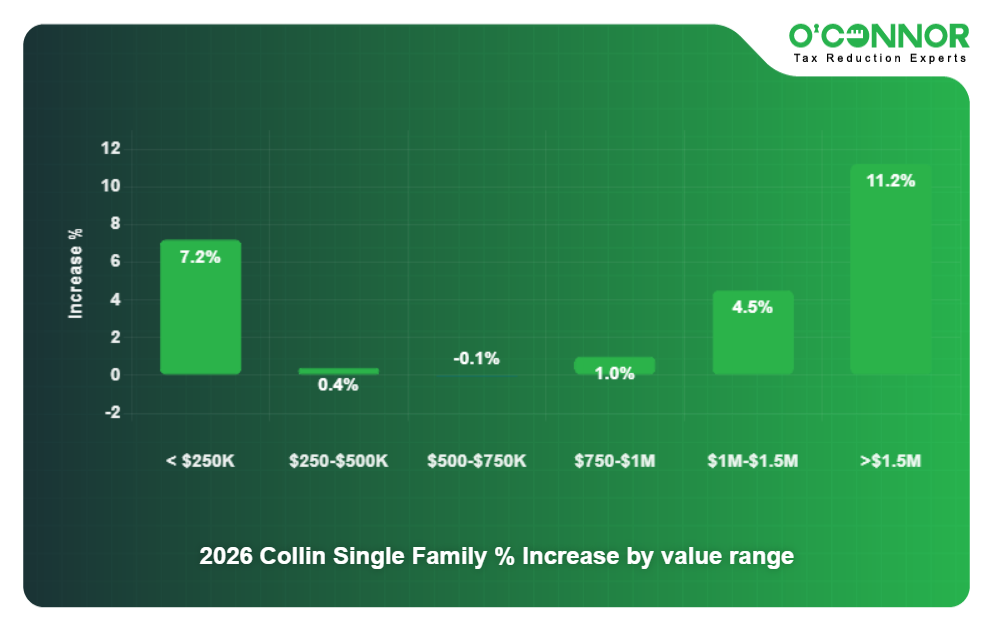
In a rare bit of good fortune, the market value of Collin’s residential real estate saw smaller increases than usual, almost stagnating. Growing by 1.8%, the overall total for homes in 2026 was $196.84 billion. Homes worth between $500,000 and $750,000 were the largest source of this value, totaling $54.37 billion after a tiny reduction of 0.1%. Adding just 0.4%, homes valued between $250,000 and $500,000 were in second place with $59.57 billion. Third place went to residences worth between $750,000 and $1 million, which added 4.5%. Jumping 11.2%, the most expensive homes in the county reached a final tally of $17.68 billion. Showing the overvaluation of Collin County, homes worth under $250,000 totaled a paltry $3.58 billion.
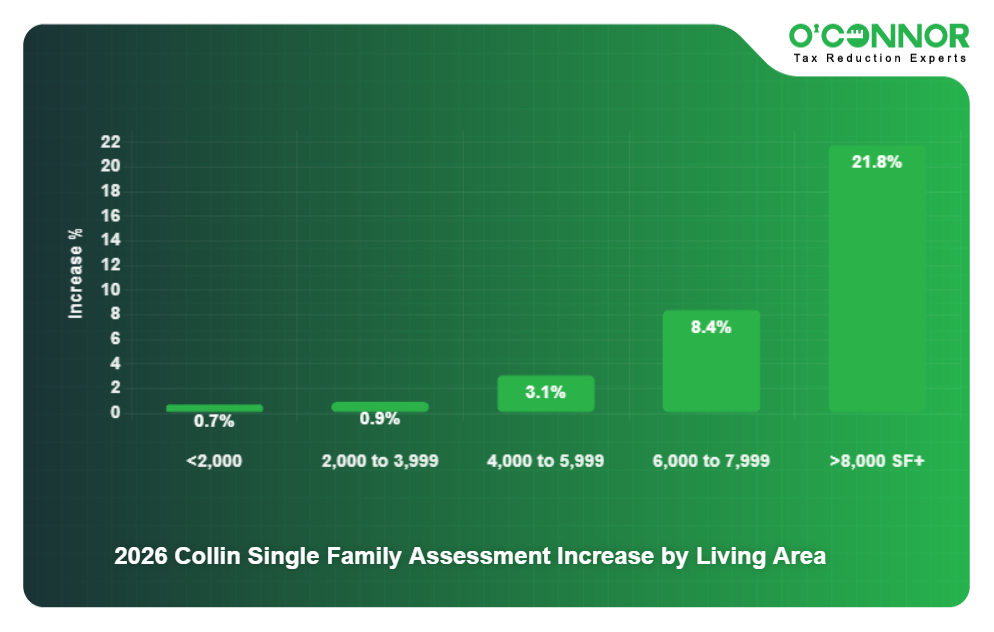
Collin leaned into larger homes more than most other counties, with the biggest source of residential value being those measuring between 2,000 and 3,999 square feet. These residences totaled $120.87 billion after increasing 0.9%. These were followed by homes between 4,000 and 5,999 square feet, which achieved a final figure of $35.55 billion after growing by 3.1%. The smallest homes in the county had a final tally of $31.74 billion, with a growth rate of 0.7%. The larger homes increased the fastest, with mansions over 8,000 square feet totaling $3.91 billion after soaring by 21.8%.
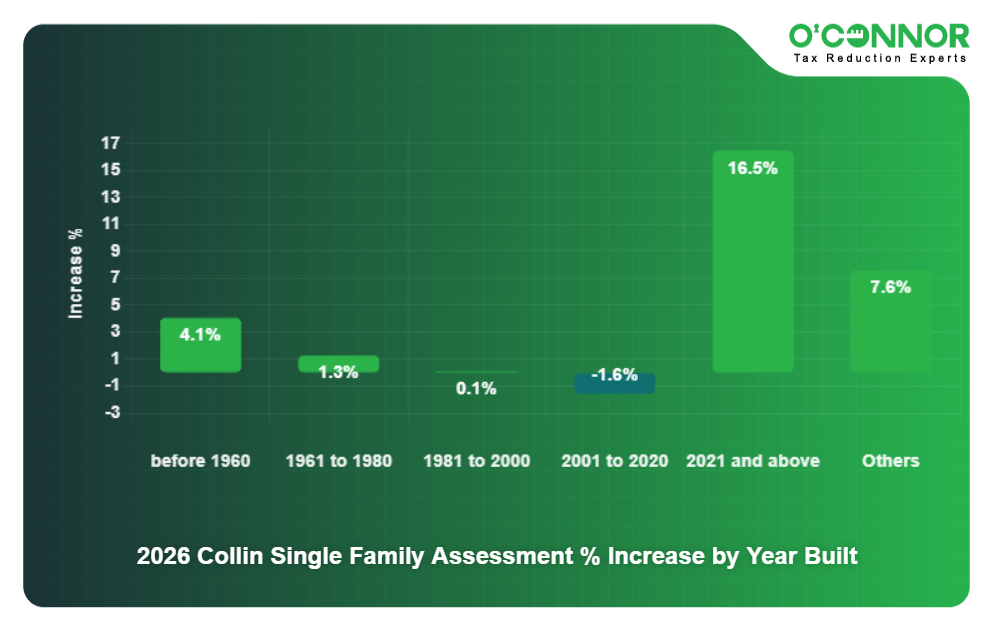
As the size and price of homes indicate, Collin is not a county filled with older buildings. 46% of all value was constructed in the building boom between 2001 and 2020, which translated to a total of $90.29 billion. This impressive total was achieved even after a 1.6% fall in value. Homes from 1981 to 2000 increased by just 0.1%, totaling $59.57 billion. Skyrocketing by 16.5%, new construction was in third place with $31.67 billion. The remaining properties combined for around 8% of the overall total.
34% of Collin Homes are Overvalued
Collin Houses Valued above/below Market Value based on Jan 2025 – Mar 2026 Sales
It is believed by CCAD that roughly 34% of homes in the county are overvalued. This is a step back, as around 22% of homes were overvalued in 2025. As overappraisal is one of the primary grounds for property tax protests, this means that appeals are more justified than ever in Collin County. This is why almost one-third of all properties in the county are protested every year.
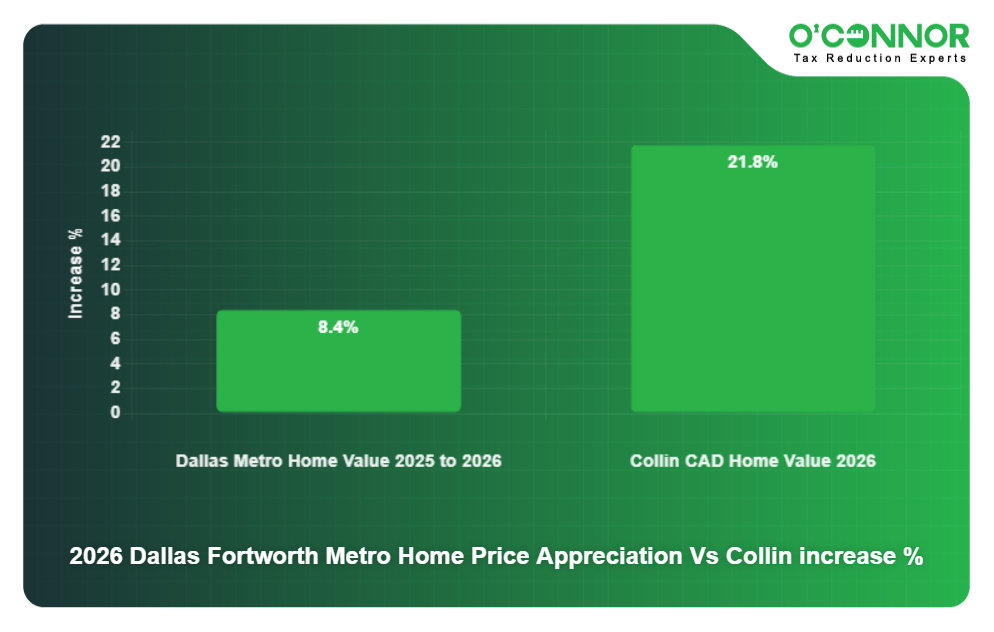
A study by Dallas-area realtors backed up this claim by comparing home sales to CCAD’s values. According to the study, real home values increased by 1.4%, while the CAD’s number jumped 1.8%. While not a staggering difference, appeals are won in the margins, as long as they are well-executed. Taxpayers should never have to pay extra, even if it is a small amount, and any discrepancy should be investigated to the fullest.
Collin Business Values Soar 13.8%
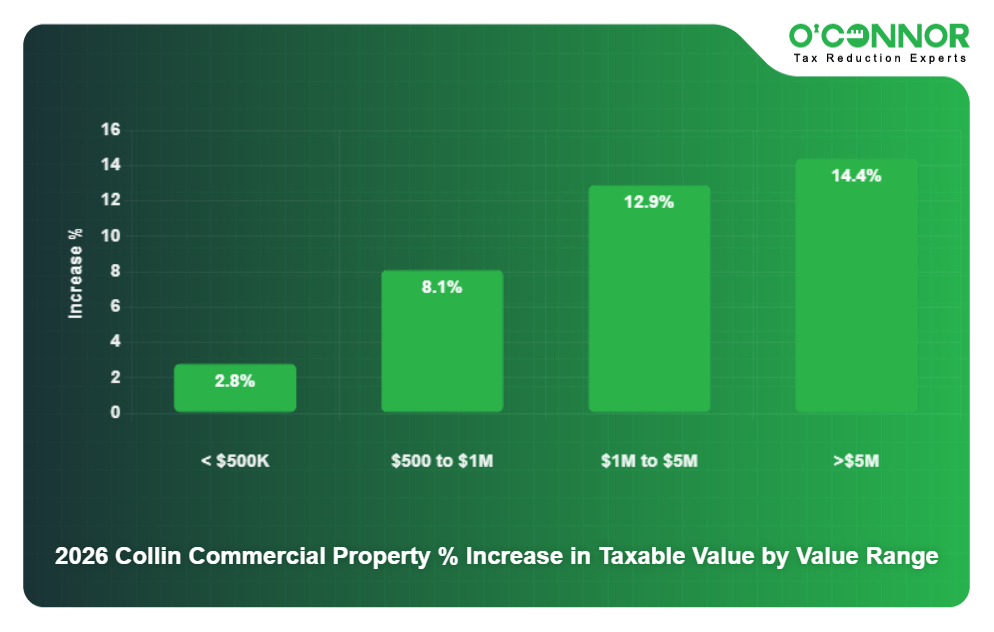
While home values mostly stabilized, the same could not be said for commercial real estate. Already increasing 14.8% in 2025, businesses added an additional 13.8% in 2026, reaching $56.58 billion. This was mainly driven by the largest businesses, which is typical for Texas. Commercial real estate worth over $5 million surged by 14.4%, totaling $54.65 billion. This was followed by those worth between $1 million and $5 million, which jumped 12.9% to $9.17 billion. While increasing, the remaining two categories only totaled a combined $1.7 billion.
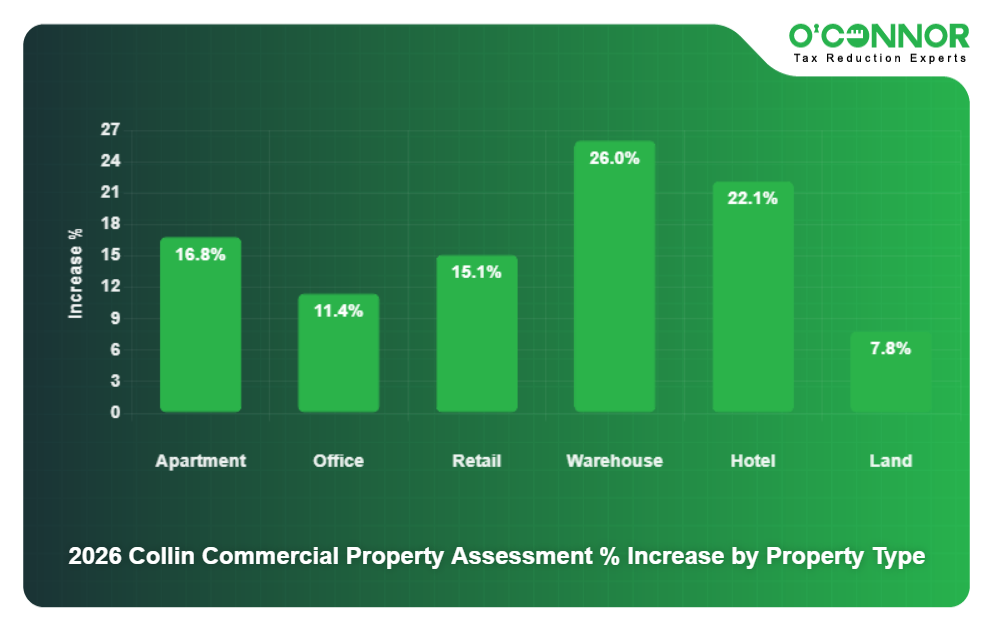
Due to its reputation as a suburb, it should be no surprise that the largest commercial real estate in Collin County was apartments. Totaling $26.27 billion after surging 16.8%, apartments only grew their lead. They were followed by offices at $15.41 billion, which was the result of a growth rate of 11.4%. Adding 7.8%, raw land showed the county’s untapped potential, achieving a final tally of $13 billion. Retail totaled $8.38 billion, while warehouses tallied $1.52 billion. These grew by 15.1% and 26%, respectively.
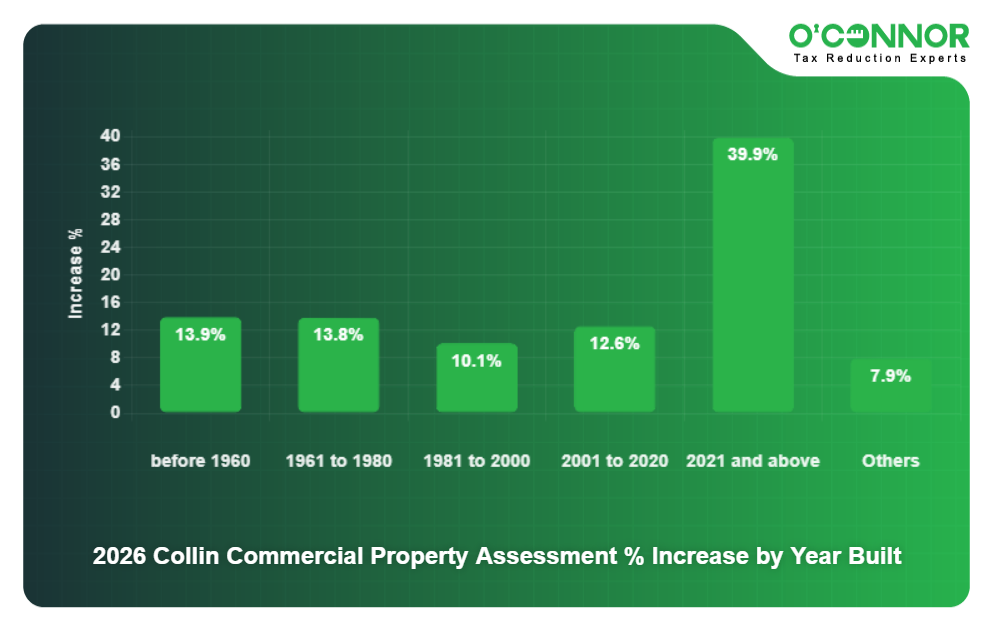
When looking at the age of construction, commercial properties followed houses to the letter. Those built from 2001 to 2020 had the most value at $28.68 billion, following a strong increase of 12.6%. Those from 1981 to 2000 were in second place with $15.27 billion, following a spike of 10.1%. New construction was the most dynamic, adding 39.9%, reaching a new total of $8.33 billion. The other categories combined for 2% of the total, while raw land was accountable for 20% of the overall value.
FRED Shows National Commercial Properties Losing Value
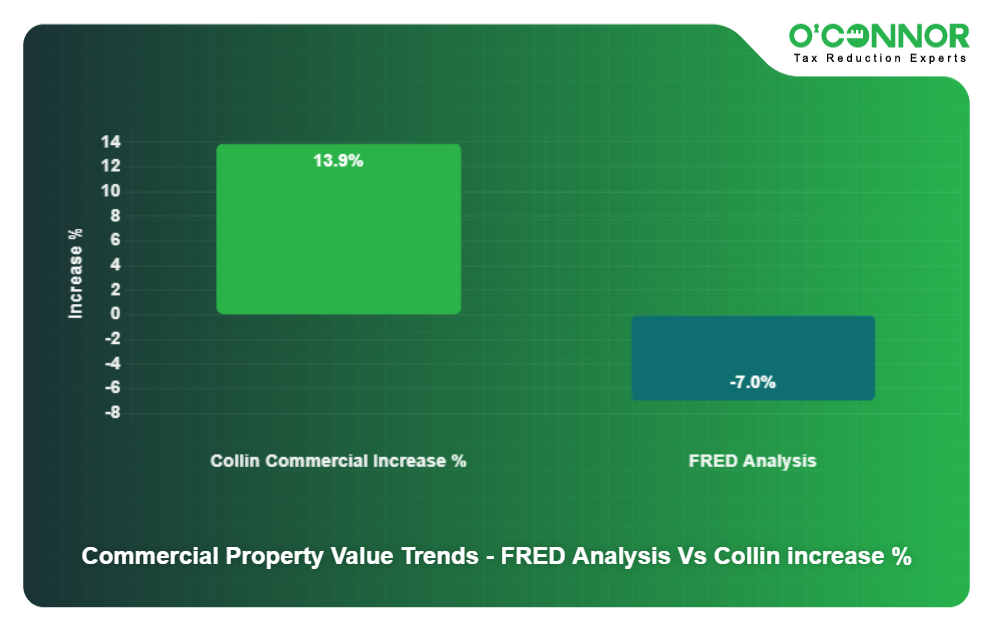
Texas is one of the fastest-growing economies in the nation, and Collin is one of the top counties, so having a large increase in business real estate is to be expected. However, it could be overinflated. According to the Federal Reserve of St. Louis (FRED), nationwide commercial real estate has fallen in value by 7% over the past five years. While Texas is doing much better than many states, this information should give business owners pause. With a solid percentage of homes being inflated, it can safely be assumed that the same is happening to businesses. This makes protesting business values more vital than ever.
Apartments Skyrocket by 16.8%
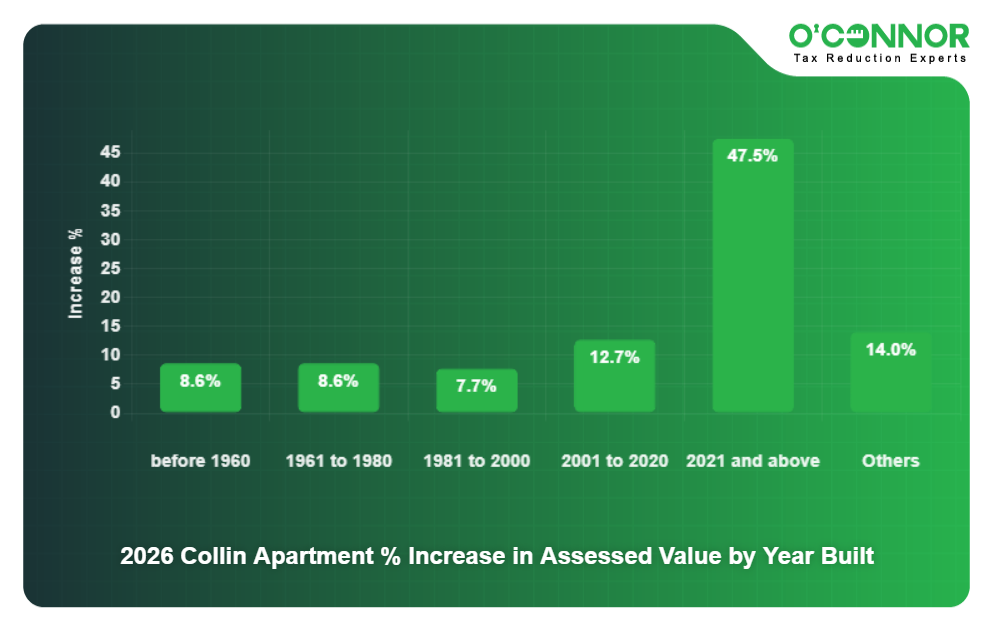
Thanks to growing demand, the age of construction for apartments shows a stronger recency bias than other properties. 50%, or $13.04 billion of value was built from 2001 to 2020, which added 12.7% in 2026. This was followed by construction from 1981 to 2020, which jumped 7.7% to $7.4 billion. The headliner was certainly new construction, which grew by a staggering 47.5% to $5.45 billion, accounting for 21% of the total value. All other timeframes combined for around 1% of the total.
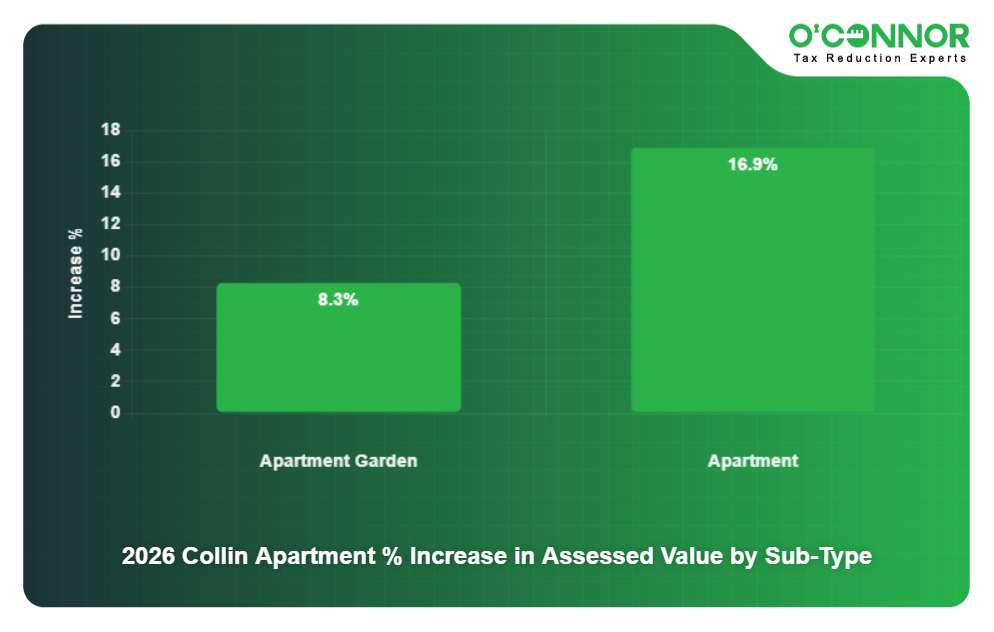
CCAD only divided apartments into two categories. Weighing at $26.16 billion, generic apartments added 16.9% in value. Garden apartments were responsible for $108.05 million after increasing by 8.3%.
Offices Jump by 11.4%
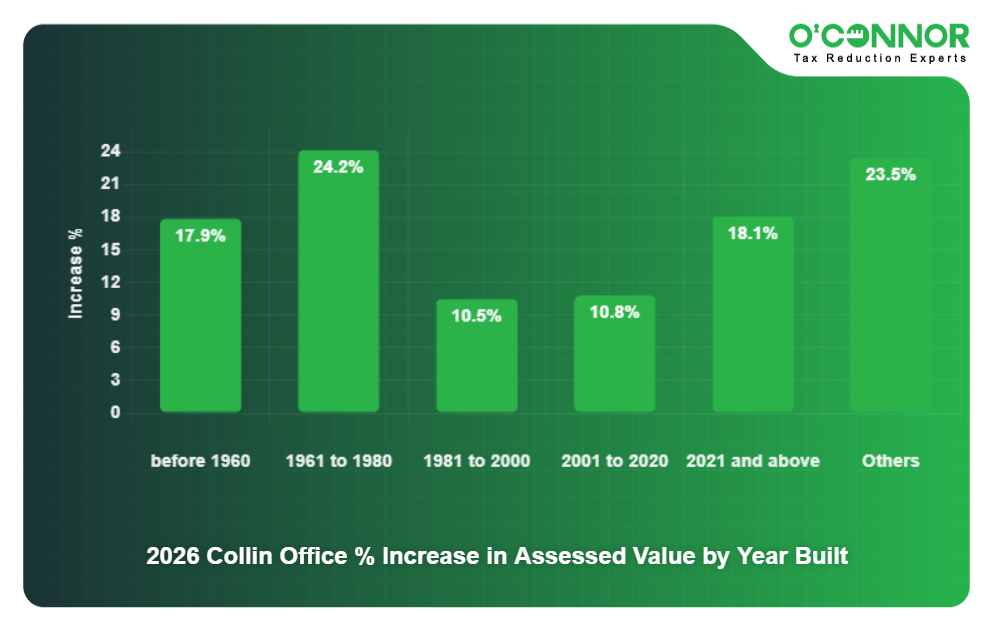
While offices followed the same construction pattern as the rest of the county, most of the value was tied to the boom of 2001 to 2020. Totaling $9.51 billion, these represented 62% of the overall value, after increasing by 10.8%. Those built from 1981 to 2000 accounted for 28%, or $4.30 billion, following a jump of 10.5%. New construction tallied $1.48 billion, which was around 10% of the overall value. The remaining timeframes combined for less than 1% of the total.
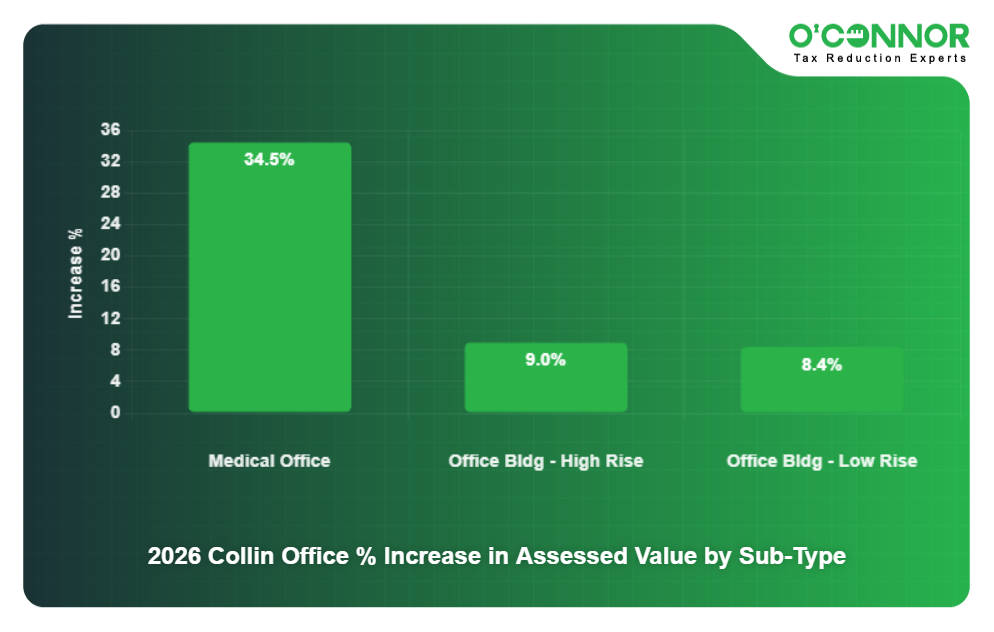
Low-rise office buildings made up the bulk of value, with a final sum of $10.10 billion, following a growth spurt of 8.4%. High-rise offices added 9% to reach $3.26 billion. Medical offices soared by 34.5% to $2.05 billion.
Retail Jumps by 15.1%
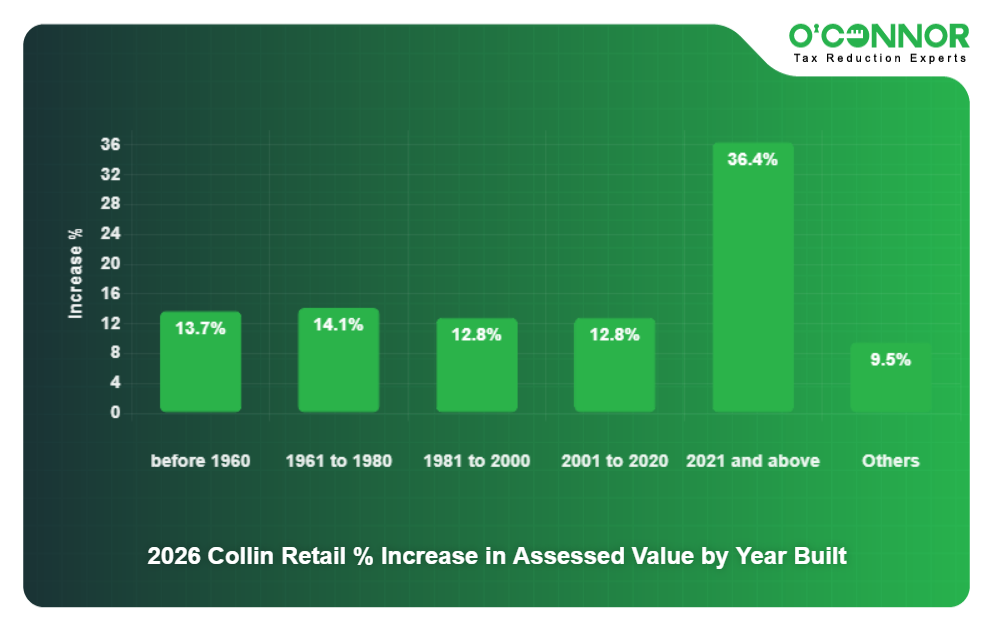
Retail has seen a resurgence since the pandemic, and Collin County has seen a massive bounce back. Growing by 15.1%, retail totaled $8.38 billion. The pattern for the age of construction remained unbroken, with $4.09 billion coming from stores constructed between 2001 and 2020. Construction from 1981 to 2000 was in second place with $2.64 billion. Both of these categories increased by 12.8%. New construction saw another surge; this time it was 36.4%. This resulted in a final sum of $935.35 million.
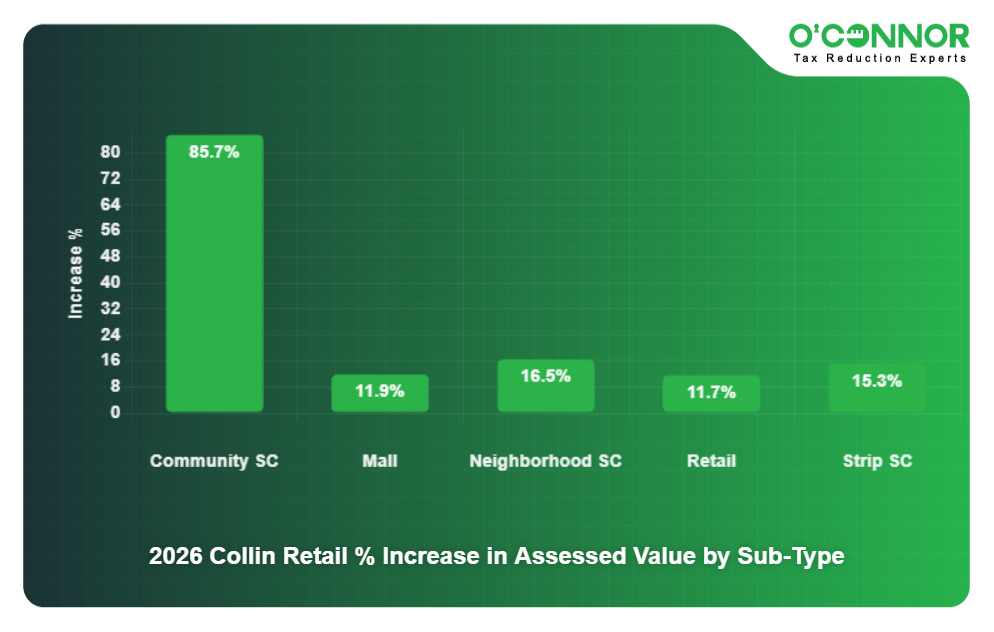
The largest source of retail value was the Texas stable of strip centers, which reached $3.39 billion, though they were closely followed by neighborhood shopping centers at $3.30 billion. These increased by 15.3% and 16.5%, respectively. Single-occupancy big box stores scored an increase of 11.7%, resulting in a final tally of $1.10 billion. Community shopping centers increased by an astounding 85.7%, but only totaled $15.60 million.
Warehouses Spike by 26%
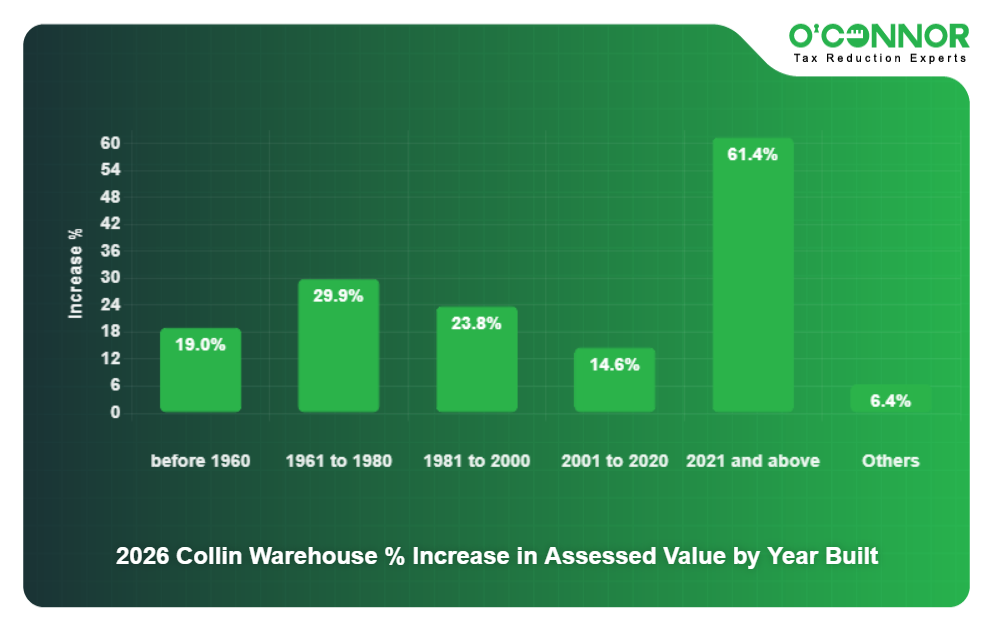
No property type, commercial or residential, grew more than warehouses. These properties have generally surged across the whole of Texas and are a strong part of any growing economy. These showed a large recency bias as well. While the boom period of 2001 to 2020 was naturally in the lead with $566.87 million, those from 1981 to 2000 were right behind with $527.38 million. These increased by 14.6% and 23.8%, respectively. New construction had another heyday, this time with a jump of 61.4%, which meant a final sum of $296.78 million. The two remaining categories saw impressive growth, though they only combined for $119.13 million.
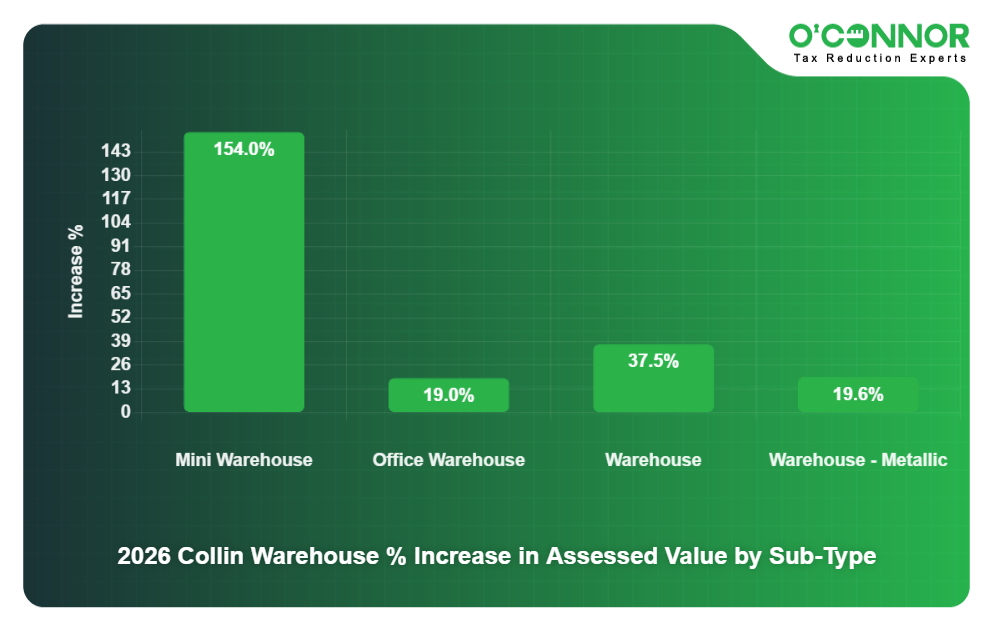
Totaling $918.10 million, office warehouses controlled the most value, jumping up by 19%. Generic warehouses surged 37.5% to $579.78 million. Mini warehouses flew through the roof with an increase of 154%, finishing with a final sum of $10.04 million. Metal warehouses added 19.6% to reach $6.92 million.
O’Connor Helps Land Fair Tax Reductions
With large increases over the past decade and plenty of uncertainty about the veracity of CCAD’s numbers, there has been no better time in the history of Collin County to launch a property tax protest. These challenges can bring the appraised values back down to reality, ensuring that you are only paying for what you truly owe. Even if home values have stabilized, that does not mean they will remain so. Even if values read water, tax rates can still increase.
We at O’Connor have been helping Texans get reductions on their taxes for over 50 years. Based in Houston, we have offices all over the Lone Star State, including in the DFW area. This allows us to utilize local expertise to go along with our national resources. This gives us an edge over both national and local firms when it comes to launching protests. We also enhance evidence gathering by utilizing data-driven techniques and patented databases.
When you sign up with O’Connor, you get a customer success consultant who acts as your constant point of contact. They will answer your questions, update you on hearings, and help guide you to the best reduction. Many clients can also get a concierge visit, which is when one of our experts comes out to your home or business, free of charge, to help find any issues that can aid your protest. There is no cost to join, and you will only be charged part of your winnings if we are able to lower your taxes.