


Thanks to limited space, Galveston County has some of the most expensive property in Texas, at least when it comes to premium locations. This has led to some of the highest taxes in the state, rivaled by the likes of Travis and Fort Bend Counties. Thanks to the likes of Airbnb, the competition for homes has never been fiercer. This has led to taxpayers across the county challenging the values handed out by the Galveston Central Appraisal District (GCAD) in record numbers, using property tax protests and even lawsuits.
Homes Increase 4% in Value
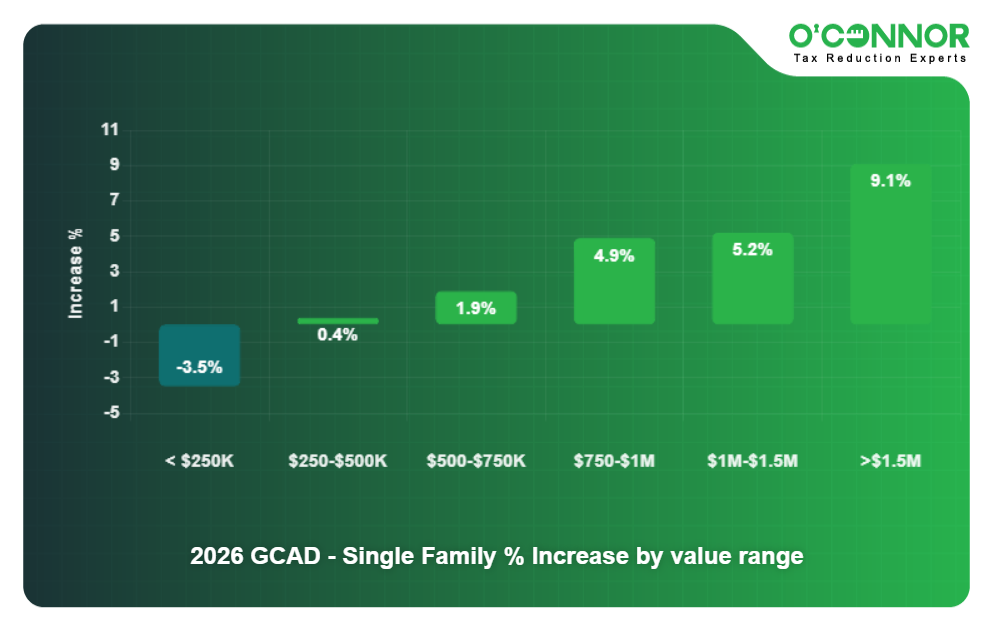
In 2025, GCAD estimated that the market value for homes had jumped 7.5%. In 2026, that number was a much more reserved 1.7%, though it still marked an overall increase from a total of $48.04 billion to $48.64 billion. The overall growth was stymied thanks to the largest source of value, homes between $250,000 and $500,000, only growing by 0.4% to reach a final sum of $22.53 billion. Homes worth under $250,000 experienced a decrease of 3.5%. Homes worth between $500,000 and $750,000 totaled $9.88 billion following a jump of 1.9%. The most expensive residential properties saw the most gains, highlighted by a spike of 9.1% for those worth over $1.5 million. These premium homes accounted for a final number of $2.34 billion.
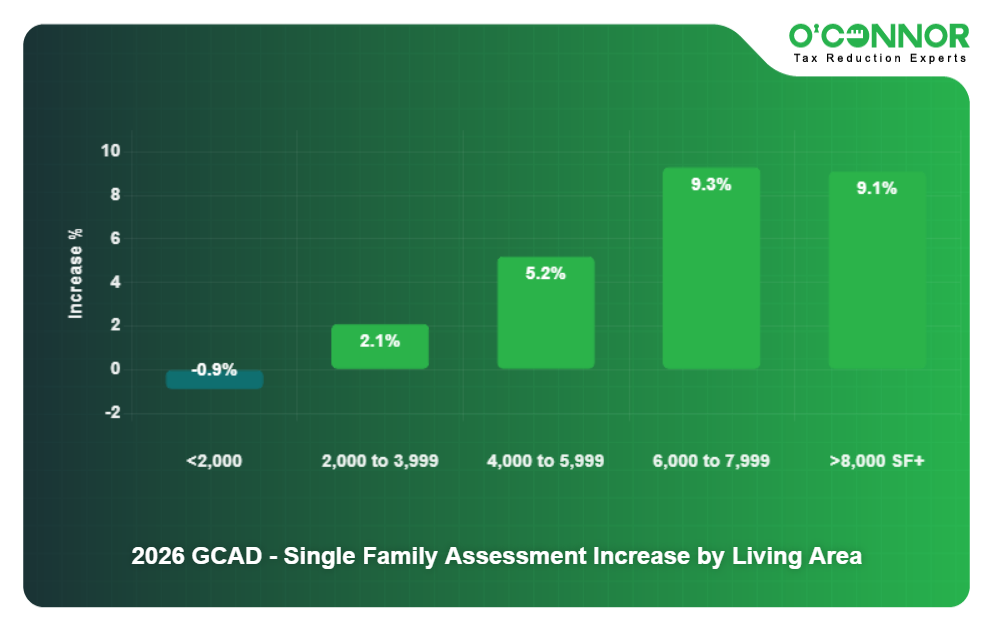
Due to limited space, it should not be surprising that most of the value generated by homes in Galveston County comes from smaller properties. Homes under 2,000 square feet saw a reduction in their value, reaching a final total of $19.15 billion. The largest category was those between 2,000 and 3,999 square feet, which grew by 2.1% to total $24.30 billion. Those from 4,000 to 5,999 square feet jumped 5.2% to $4.33 billion. The two remaining categories saw growth of over 9%, but were only a fraction of the overall total.
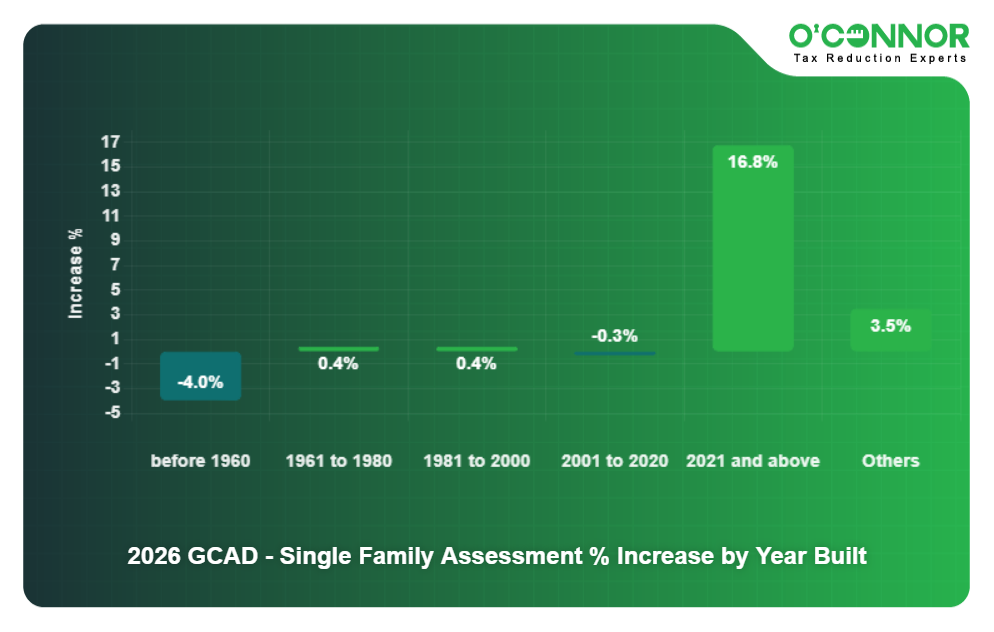
Galveston has seen a lot of development in the past few decades, giving the age of construction a strong recency bias. Like much of Texas, the most residential value was built from 2001 to 2020. This saw a slight decrease of 0.3% to reach a total of $20.58 billion. Those constructed from 1981 to 2000 totaled $13.27 billion following an uptick of 0.4%. Those constructed from 1961 to 1980 likewise grew by 0.4%, for a final tally of $6.55 billion. New construction saw a large spike of 16.8%, totaling $4.90 billion.
42% of Homes Overvalued
Houses Valued above/below Market Value based on Jan 2025 – Mar 2026 Sales
A study of home sales to start 2026 revealed that around 42% of homes were selling above the current market values set forth by GCAD. The main way to lower property taxes with appeals targeting overappraisal is to use a study of home sales, so this could indicate that homeowners should be appealing more. If nearly half of all homes are overvalued, then that means that even more homeowners should look into appeals. These do not lower the resale value of homes; they get them in line with what properties actually sell for.
Residential Value Growth Could Exceed GCAD’s Calculations
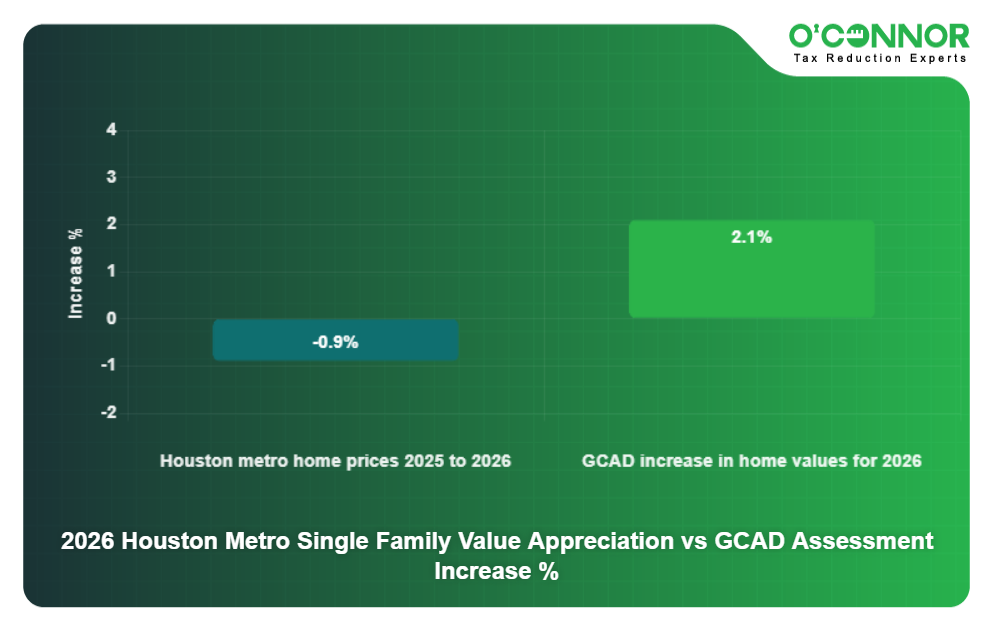
While a good portion of homes are currently overvalued, a recent study by Galveston realtors revealed that the sale prices for homes across the county have increased 3.7%, compared to the 1.3% decreed by GCAD. Like all appraisal districts, GCAD is behind market trends. This means that next year’s values could be much higher, as the real estate market makes a comeback. This behooves homeowners to appeal, so they can lock in a lower market value now. This also shows that there could be some inconsistencies in GCAD’s values that need to be explored.
Galveston Commercial Value up 13.9%
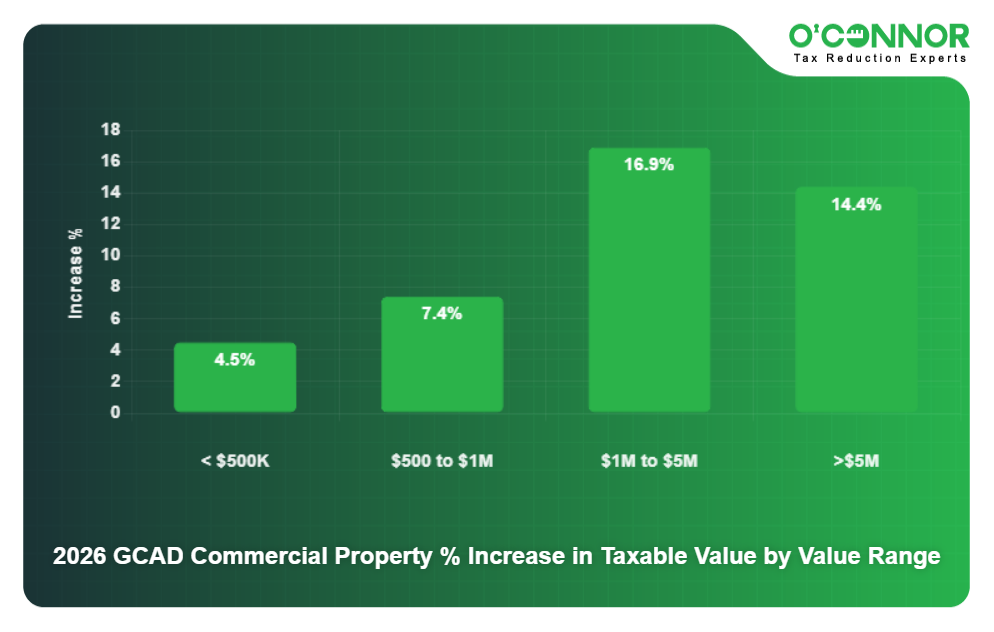
In 2025, businesses of all types saw sharp increases in Galveston County, with the overall total jumping by over 18%. This was followed in 2026 by another spike of 13.9%, taking the county’s total market value to $12.32 billion. This was spearheaded by the largest businesses, which surged14.4% to $8.77 billion. Those worth between $1 million and $5 million spiked 16.9% to $2.22 billion. The two smaller categories combined for a total of around $1.3 billion, with each seeing strong increases. Big businesses ruling the roost is common in Texas, and the majority of business value is typically driven by them.
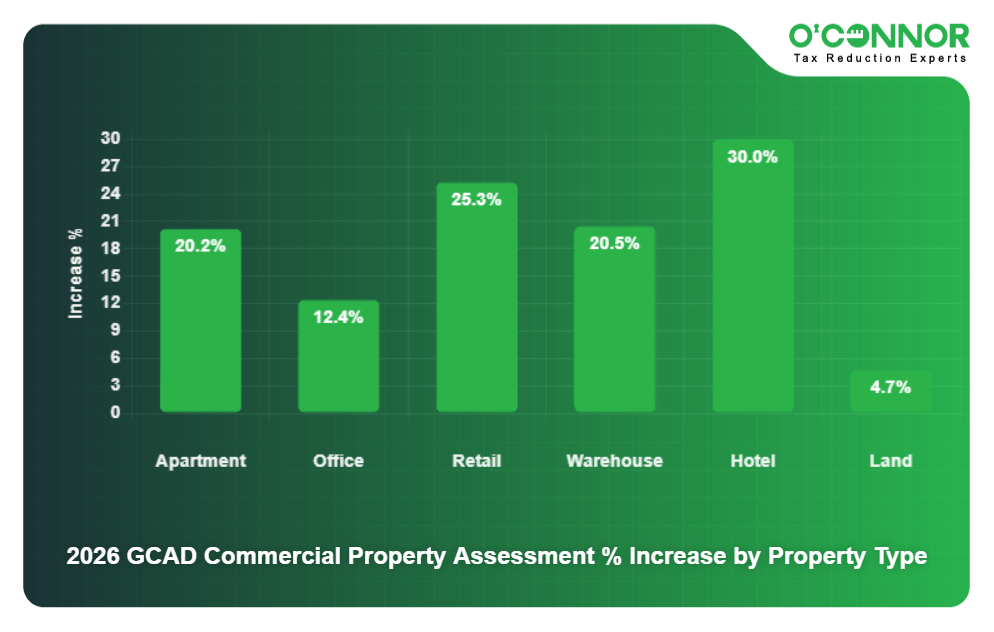
The largest source of business value for Galveston County was raw land, which totaled $4.88 billion after increasing by 4.7%. Apartments were the No. 1 property type when it came to developed land, jumping 20.2% to $3.64 billion. Retail surged 25.3% for a final tally of $1.58 billion, followed by offices at $1.33 billion, following an uptick of 12.4%. Warehouses and hotels spiked 20.5% and 30%, respectively, but each totaled under $1 billion.
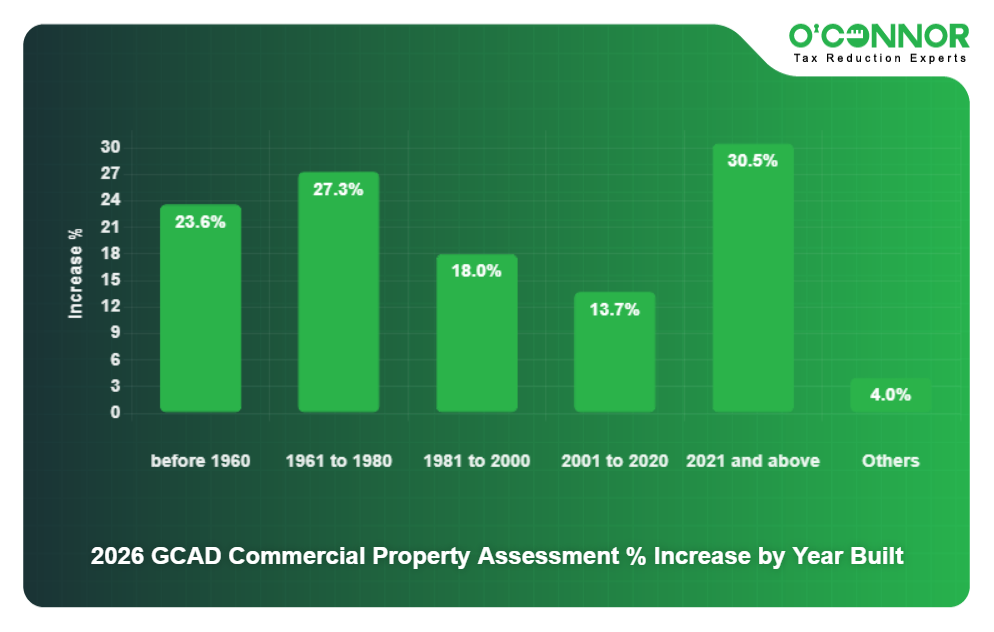
Commercial property construction timeframes followed those of homes. Those built from 2021 to 2020 were in the lead with $2.73 billion, following a jump of 13.7%. Those constructed from 1981 to 2000 totaled $1.58 billion following an increase of 18%. Businesses built between 1961 and 1980 added 27.3% to reach $1.99 billion. New construction soared 30.5% to $112 billion. Even the oldest properties saw a large increase of 23.6%.
Commercial Value Falls 7% Nationwide
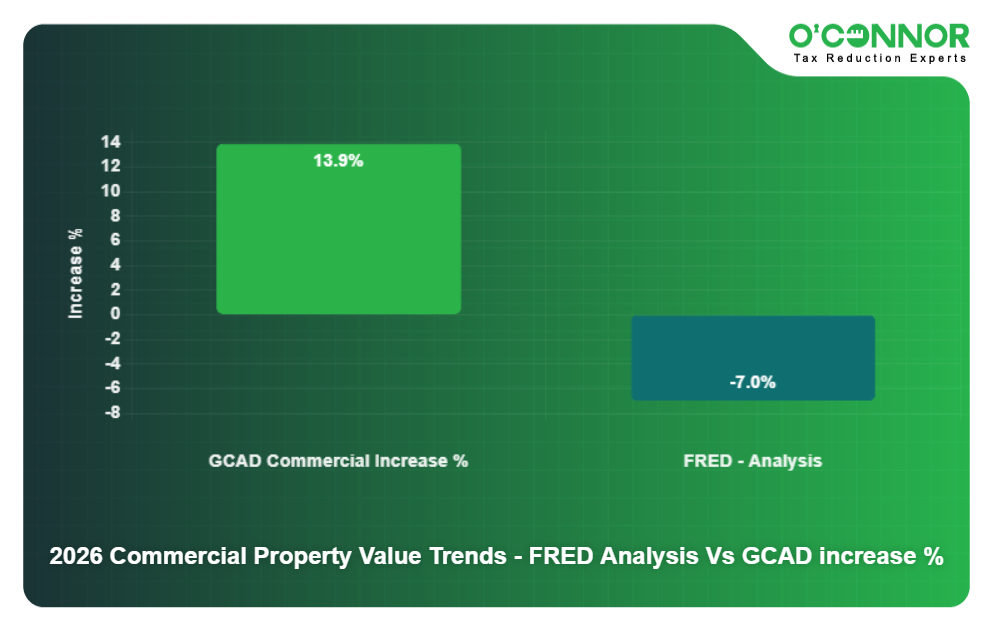
While businesses are setting records for market value in Galveston, the rest of the nation is seeing a different story. According to the Federal Reserve of St. Louis (FRED), the value of business real estate has fallen 7% nationwide. While Texas has had a booming economy for the past decade, this can certainly give taxpayers pause. Businesses generally protest their taxes every year, and discrepancies like this are why.
Apartments Total Over $3.6 Billion in Market Value
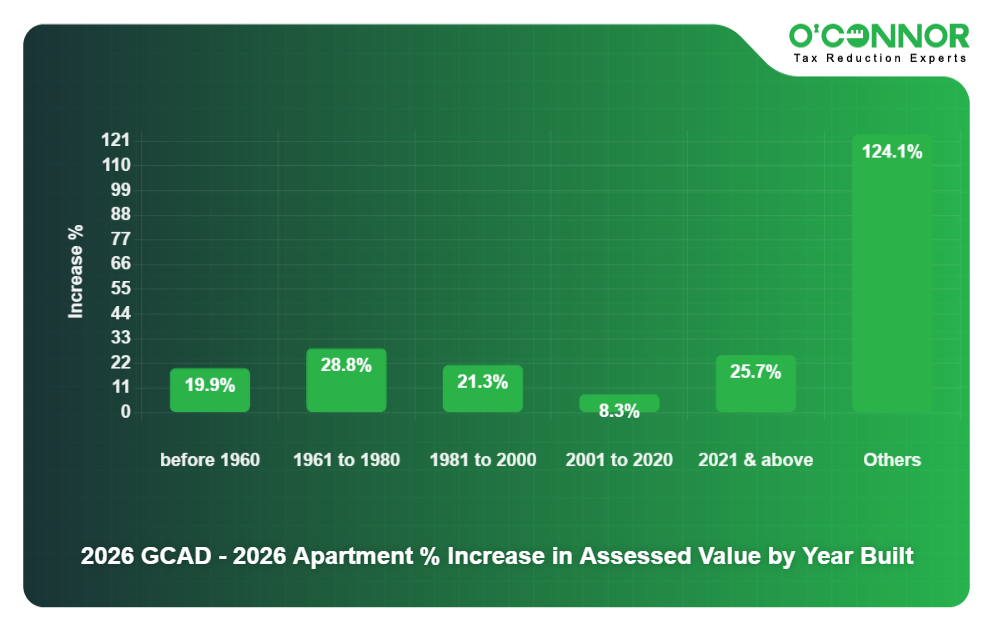
As with most urban counties, the No. 1 business type is apartments. These added even more in 2026, jumping 20.2% to $3.64 billion. This value was created by a strange combination of old and new properties. The largest timeframe to create value was between 1961 and 1980, which was responsible for $1.17 billion following an increase of 28.8%. Those from 2001 to 2021 were in second place with $1.03 billion, following a jump of 8.3%. New construction surged 25.7% to account for $675.36 billion. Land set aside for apartment construction more than doubled in value.
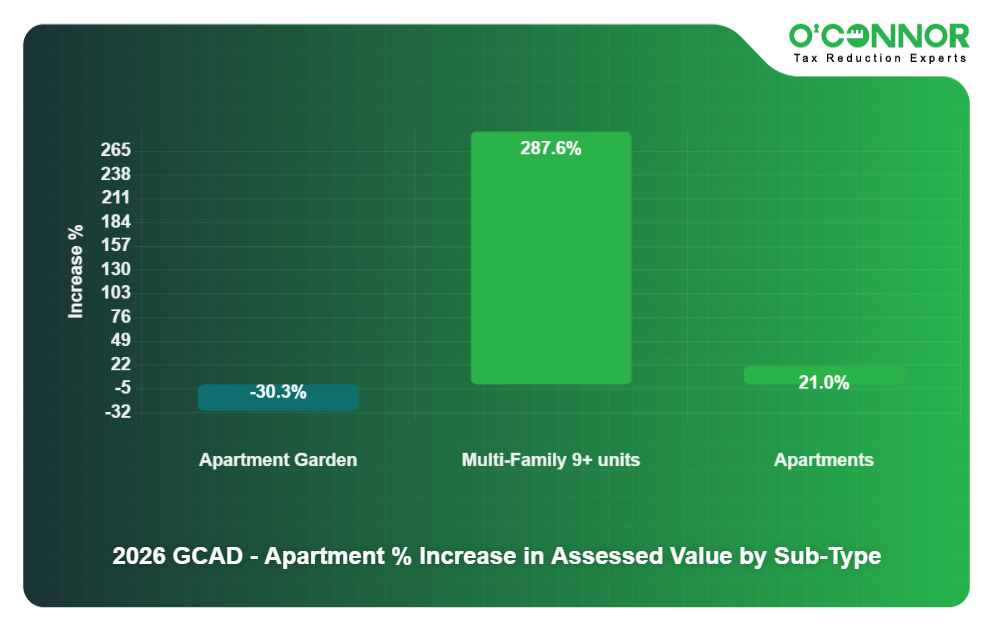
GCAD divided apartments into three subtypes. Generic apartments totaled $3.58 billion following a jump of 21%. Multifamily soared 287.6%, but only achieved a final sum of $13.28 million. Garden apartments fell 30.3% to $41.70 million.
Offices Grow 12.4%
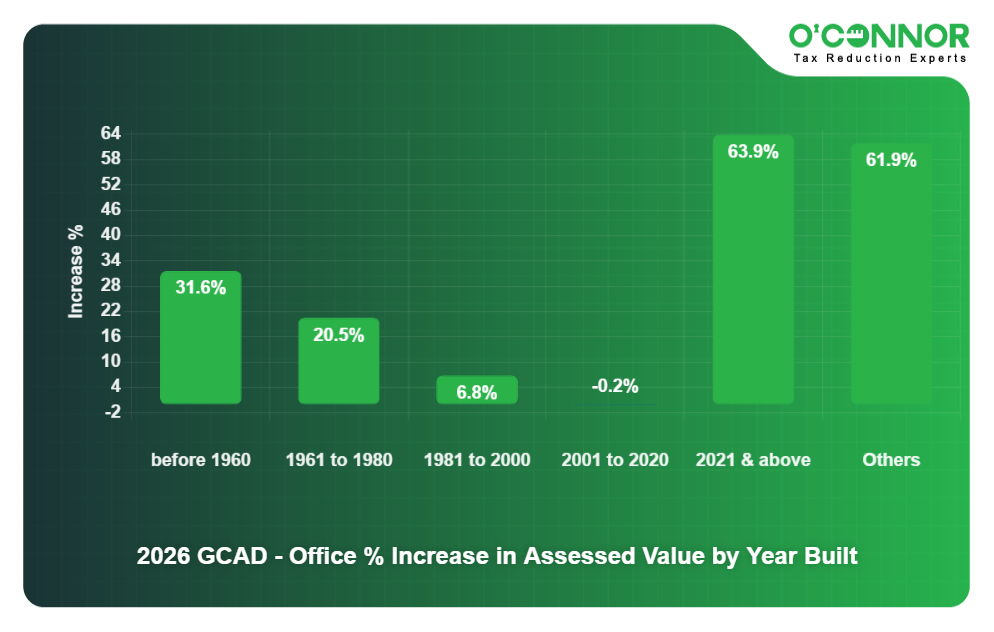
While most people do not think of offices when it comes to Galveston, they were worth a respectable $1.33 billion following a surge of 12.4%. Those built from 2001 to 2020 were in the lead spot with $472.51 million, despite a slight decrease. Leaping 20.5%, offices built between 1961 and 1980 totaled $333.47 million. Those from 1981 to 2000 increased 6.8% to $309.34 million. New construction soared by 63.9%, but only totaled $123.04 million.
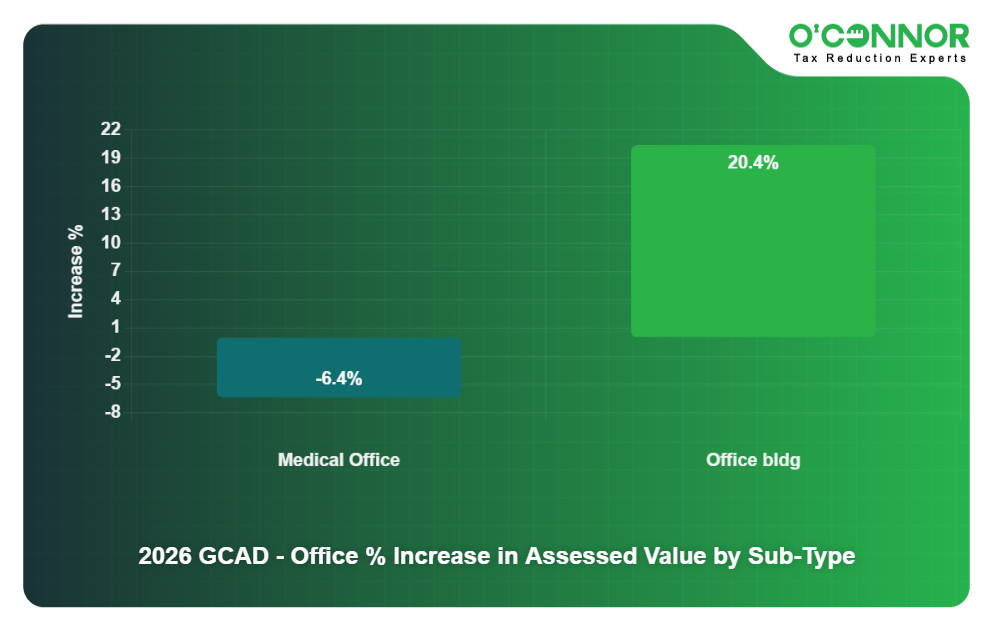
There were only two subtypes of offices. Office buildings totaled $999.14 million following an increase of 20.4%. Medical offices, on the other hand, declined 6.4% to $333.84 million.
Retail Accounts for Over $1.58 Billion in Market Value
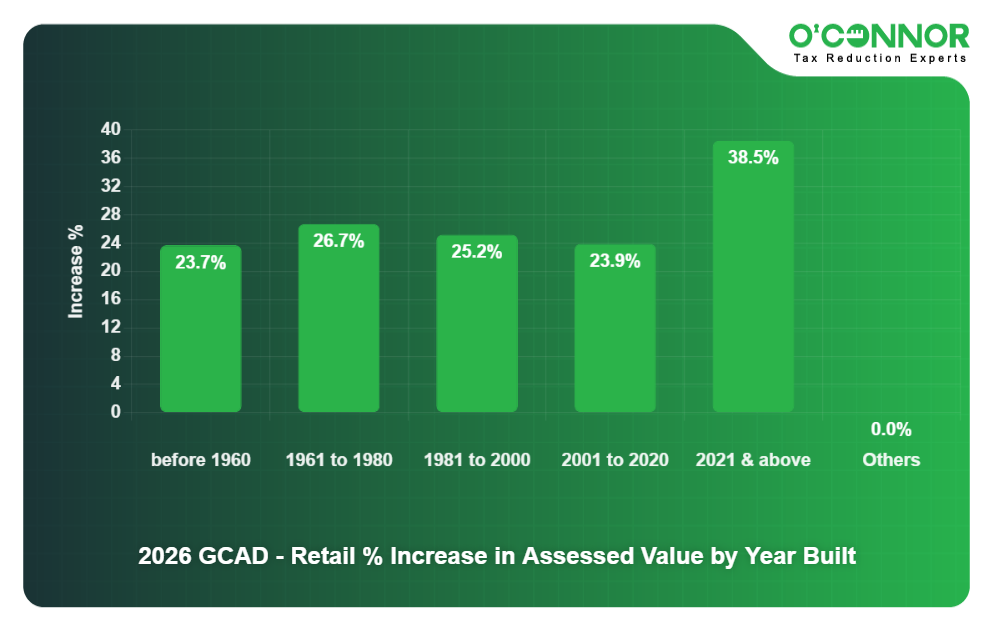
Retail has a strong presence in Galveston County, achieving a total of $1.58 billion. Nearly half of this value was built between 2001 and 2020, with a total of $745.09 billion. 1961 to 1980 accounted for $339.82 million following a jump of 26.7%. Those from 1981 to 2000 added 25.2% to reach $292.83 million. New construction increased significantly, but only accounted for 4% of the overall total.
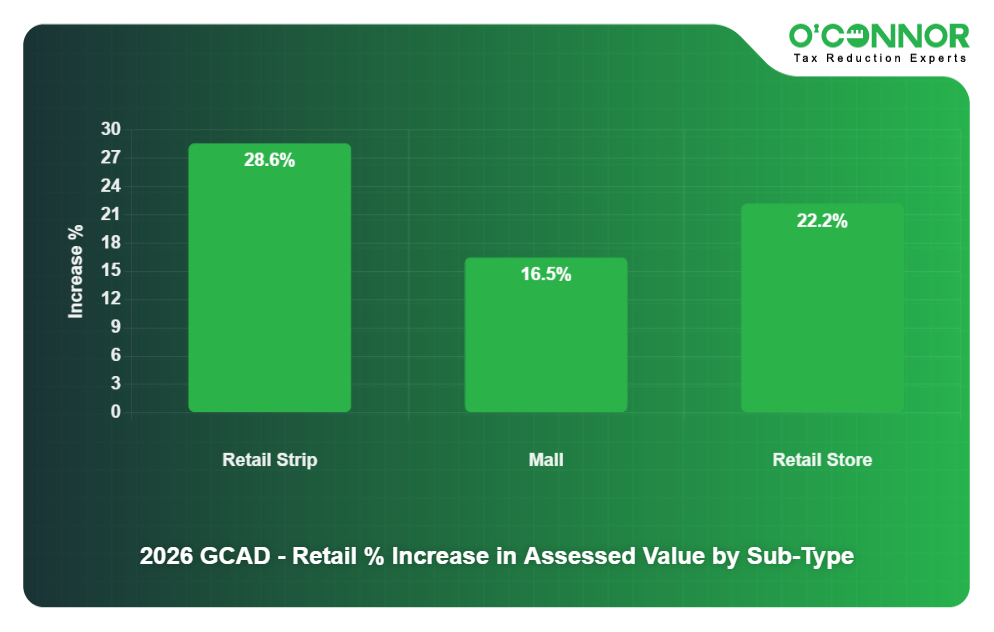
Spiking 28.2%, strip malls took over the No. 1 spot from retail stores by scoring a total of $799.42 million. Stores, meanwhile, accounted for $762.10 million after an increase of 22.2%. Despite only being worth around $15.19 million, malls still grew by 16.5%.
Warehouses Add 20.5%
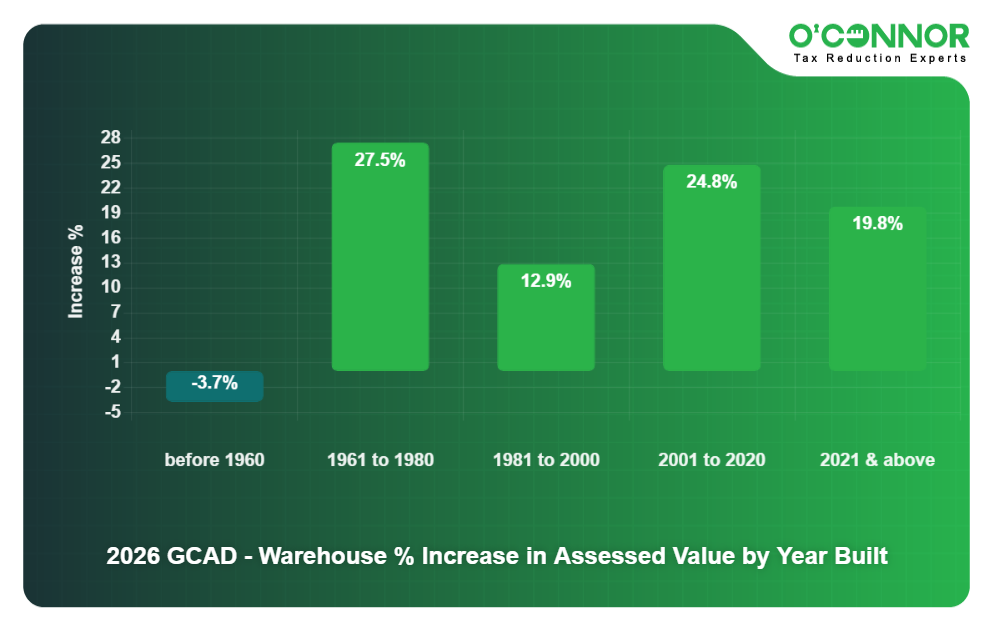
Despite being a major port, Galveston was surprisingly lacking in warehouse value, with a total of only $271.30 million after a strong bump of 20.5%. 47% of this value, was built between 2001 and 2020, following a spike of 24.8%. Those built from 1981 to 2000 were in second place with $74.93 million. Warehouses built from 1961 to 1980 experienced an increase of 27.5%, reaching $51.71 million. New construction was only responsible for 3% of the total value.
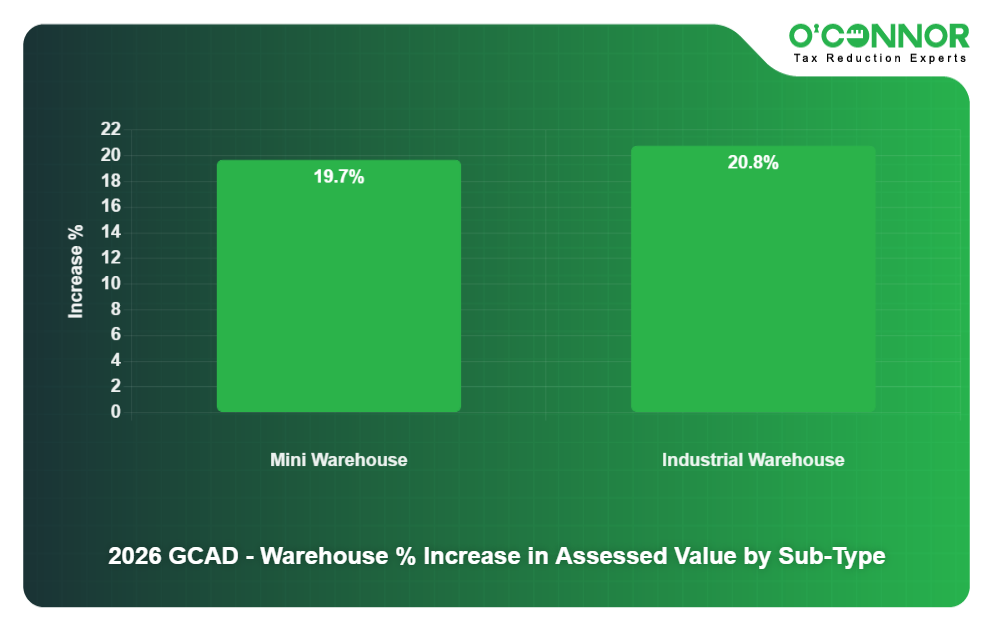
GCAD only used two subtypes for warehouses. Industrial warehouses saw a large bump of 20.8% to $215.53 million. Mini warehouses grew 19.7% to $55.77 million.
O’Connor Helps Reduce Property Taxes
While 2026 was not quite the huge growth spurt that 2025 was, it was still a significant increase, especially for businesses. Thankfully, much of the initial damage from the 2025 spike was mitigated thanks to property tax appeals, which reduced market value considerably. These were so effective in 2025 that the commercial increase was almost wiped out entirely. Galveston County boasts not only a large percentage of participation in protests, but it often sees them won to great effect.
Based in Houston, we at O’Connor have been helping the people of Galveston for decades. While we find great success for our clients across all of Texas, the counties around Houston see some of the most success. We also aim to take our clients’ protests to the highest level possible, often with hearings with the appraisal review board (ARB) or with litigation against GCAD. Secondary appeals and litigation are especially important in Galveston, and it pays to have a veteran firm at the helm.
When you sign up with O’Connor, we give you a client success consultant. This will be your guide through the whole process, and they act as a constant point of contact that you can turn to. We can also send out concierge team members to your property for site visits, where they can help you understand issues and even spot evidence for appeals. There is no risk to protesting your taxes, as your values can never be increased. Winning will also not lower your property’s resale value, as appeals have no bearing on what real estate sells for. There is no cost to join, and you will only be charged a portion of your savings if we can lower your taxes.