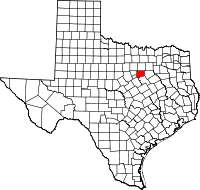


Central Appraisal District’s of Johnson County
Local Appraisal District
O’Connor serves more Texas property owners than any other tax consultant because:
- O’Connor knows and uses every potential method to lower your property taxes. Using binding arbitration is a common practice. O’Connor is responsible for paying the deposit, which may or may not be refunded based on the outcome of the hearing.
- We have an in-depth knowledge of what is required to lower your property taxes based on performing millions of tax appeals across Texas.
- A winning combination: relationship evidence files and hearing evidence files loaded with the material the appraisal district is seeking.
- Our proficiency has allowed us to collect sales and uneven appraisal data in a manner that meets the standards established by the Johnson County ARB and the Johnson CAD.
Central Appraisal District’s of Johnson County
Local Appraisal District
1 Search for your Property
Start the process to reduce your property taxes by entering your property address below and searching as step
Yes, O’Connor can help you reduce your property taxes
- Yes – there is NEVER a fee unless we reduce your property taxes
- Simple on-line enrollment in just 2 or 3 minutes
- We do all the work and you just share in the savings. We file the protest and attend the hearing. No flat fee; just pay half of first year property tax savings
- Personalized concierge service site visits
- O’Connor saved clients over $213 million in 2025!
2 Claim your property tax discount
Potential Tax Savings For Your Property
May be over-assessed by
8.65% *
Potential Tax Savings
$764 *
Have Additional Properties?
Benefits of O’Connor :
- Simple, online enrollment in just minutes, or call us at 713.290.9700 if you prefer.
- No fees ever unless we reduce your property taxes, not even a nickel. We promise.
- Aggressive property tax consultants with hundreds of years collective experience. We understand the people and process to negotiate lower property taxes for you. Our interests are properly aligned. We never, ever get paid unless you reduce your property taxes.

Benefits of O’Connor :
- Simple, online enrollment in just minutes, or call us at 713.290.9700 if you prefer.
- No fees ever unless we reduce your property taxes, not even a nickel. We promise.
- Aggressive property tax consultants with hundreds of years collective experience. We understand the people and process to negotiate lower property taxes for you. Our interests are properly aligned. We never, ever get paid unless you reduce your property taxes.
Are you sure you want to go back?
Your changes may not be saved.
Central Appraisal District (CAD) of Johnson County’s formal and informal 2024 hearing results are displayed below:
- Johnson County property tax savings from both formal and informal protests resulted in $24 million in 2024. In the year 2024, 20,210 accounts were contested by property owners in Johnson County.
- In 2024, a total of 47% of Johnson County’s informal property tax protests and 39% of ARB protests were fruitful.
- Through informal hearings at Johnson CAD, homeowners saved $6 million, while around $1 million was saved through ARB property tax protests.
- Johnson County had a 6% rate of properties disputed in 2024.
Save With O’Connor
1,148
Average HCAD Tax Savings

Average Property Tax Savings from Protesting (Informal + Formal)
Residential Property
343
Commercial Property
1,966
Disclaimer: O’Connor is a property tax consultant and is not affiliated with any appraisal district. Data for graphs provided by Texas comptroller.
Single Family Commercial / Other Total
Disclaimer: O’Connor is a property tax consultant and is not affiliated with any appraisal district. Data for graphs provided by Texas comptroller.
2024 County Appraisal District Statistics
Select
Year


-
 County: Johnson
 -
 Street Address: 109 N. Main St. Cleburne, TX 76033-4941
 -
 Mailing Address: 109 N. Main St. Cleburne, TX 76033-4941
 -
 Phone: 817-648-3000

Major Cities:
Alvarado, Cleburne, Keene
Johnson County totals 734 square miles, with a population of about 179,927 in 2020. Adjacent counties include Tarrant County (north), Dallas County (northeast), Ellis County (east), Hill County (south), Bosque County (southwest), Somervell County (southwest), Hood County (west), and Parker County (northwest). The total market value of real and personal property in Johnson County in 2023 was $32.87 billion. Johnson County 2023 property taxes were estimated to total $398.84 million based on an effective tax rate of 2.1%, including homestead exemptions. Johnson County property owners protested the appraised value of 6,980 houses and 15,020 commercial and BPP properties. Johnson County Appraisal Review Board appeals were successful for 53% of property owners. Property tax protests in Johnson County resulted in savings of $33.71 million in 2023, or $1,530.39 per account protested. The 2023 budget for the Central Appraisal District of Johnson County was $4.61 million, including 43 employees.
Johnson Property Tax Values